I was halfway through a frantic week of take‑out and grocery‑store runs when the kitchen turned into a disaster zone. A pan of onions had slipped, splattering caramelized sugar all over the counter, and I stared at the mess like it was a culinary crime scene. The only thing that could salvage the afternoon was a craving that had been building all morning—a sweet, smoky, salty bite that could turn a ruined kitchen into a triumph. That craving led me straight to the pantry, where I found the perfect combination of hot honey and halloumi, and the idea hit like a lightbulb: a couscous salad that would have me saying, “I dare you to taste this and not go back for seconds.”
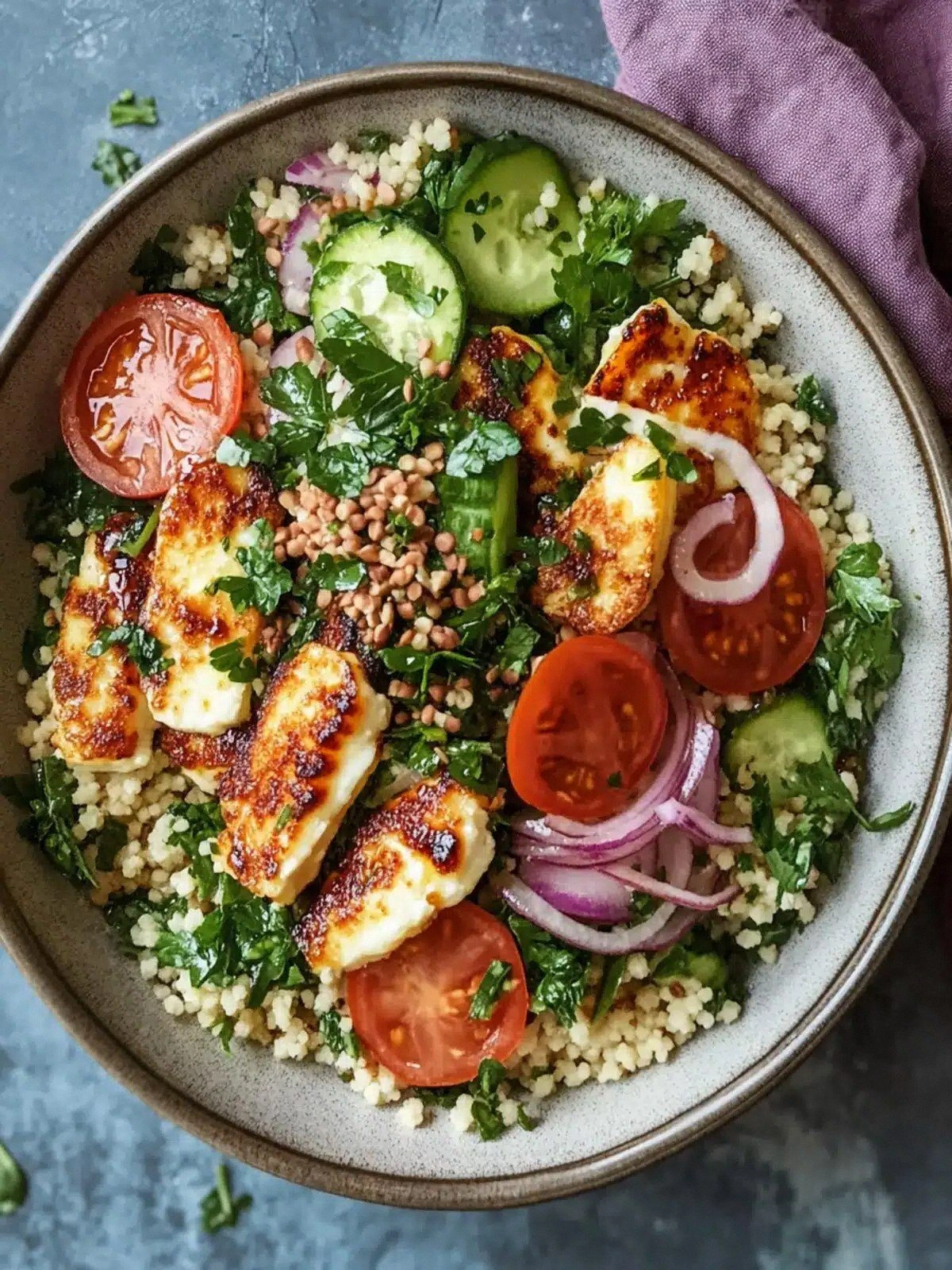
I set the stove to a gentle sizzle and let the red onion dance in a splash of olive oil, the air filling with a caramelized aroma that made my mouth water even before the first bite. The bright green arugula and spinach added a peppery bite that cut through the sweetness, while the cucumber’s crispness offered a refreshing contrast. The halloumi, once plated, crackled as it hit the pan, its golden edges forming a delicate crust that promised a satisfying crunch. The hot honey, when drizzled, glistened like liquid gold, its heat seeping into every bite. The final flourish of lemon juice and parsley added a zesty brightness that made the dish feel fresh and alive.
What makes this version stand out is that it’s not just a salad; it’s a flavor orchestra. The halloumi’s firm texture provides a protein-packed bite that balances the fluffy couscous’s lightness. The hot honey isn’t just sweet; it carries a subtle smokiness that pairs beautifully with the peppery greens. The sumac and Aleppo pepper give the dish an earthy, slightly citrusy depth that most salads lack. And the final drizzle of lemon juice cuts through the richness, leaving a clean finish that keeps you coming back for more. Most recipes get this completely wrong, treating halloumi like a garnish or using bland dressings. Here, every element is intentional, and the result is hands down the best version you’ll ever make at home.
One technique that will surprise you is the way I caramelize the onions: I keep them at a steady low heat and stir slowly, allowing them to release their natural sugars without burning. This slow caramelization creates a sweet base that elevates the entire dish. I also press the halloumi into a pan with a lid on for a few minutes, letting the cheese sweat and develop a golden crust before flipping. That second step is the secret to achieving that perfect, slightly crispy texture that shatters like thin ice when you bite into it. Picture yourself pulling this out of the pan, the whole kitchen smelling incredible, and the plate glistening with that signature honey glaze.
Okay, ready for the game‑changer? Let me walk you through every single step—by the end, you'll wonder how you ever made it any other way.
What Makes This Version Stand Out
- Flavor Depth: The combination of hot honey, sumac, and Aleppo pepper creates a layered taste profile that is sweet, smoky, and subtly spicy. The lemon juice adds a bright, citrusy lift that balances the richness.
- Texture Contrast: The crispy edges of the halloumi contrast with the tender couscous and the crunchy cucumber. The arugula and spinach bring a peppery bite that keeps each mouthful interesting.
- Simplicity: With only a handful of ingredients, the recipe is quick to assemble, yet it delivers a gourmet experience.
- Ingredient Quality: Using extra virgin olive oil and fresh halloumi ensures the best flavor and texture, while the hot honey provides natural sweetness without artificial additives.
- Make‑Ahead Potential: The couscous can be prepared in advance, and the halloumi can be cooked a few hours earlier, making this dish perfect for entertaining.
- Audience Appeal: Whether you’re a vegetarian, a meat lover, or someone looking for a quick lunch, this dish satisfies all palates.
Alright, let's break down exactly what goes into this masterpiece. And now the fun part.
Inside the Ingredient List
The Flavor Base
The red onion and olive oil form the aromatic foundation of this dish. They caramelize slowly, releasing natural sugars that sweeten the entire plate. If you skip the onion, you lose that sweet undertone that balances the honey’s heat. For a milder version, use a small amount of brown sugar to mimic the caramelized flavor.
The Texture Crew
Couscous is the light, pillowy backbone that holds the salad together. Its fine grains soak up the dressing, becoming fluffy yet tender. The arugula and spinach provide peppery bite and a burst of green, while the cucumber adds crispness. Without the greens, the dish would feel flat and one‑dimensional.
The Unexpected Star
Halloumi is the showstopper, offering a firm, chewy texture that stands up to the heat of the honey. Its salty profile anchors the dish, preventing it from becoming overly sweet. If you’re vegan, substitute with firm tofu or a plant‑based cheese that holds its shape when pan‑fried.
The Final Flourish
Sumac and Aleppo pepper are the secret spices that add depth and a hint of citrusy tang. They elevate the dish from simple to sophisticated. Lemon juice and fresh parsley finish the plate with brightness and a touch of herbal freshness. Skipping the parsley would make the dish feel less vibrant.
Everything's prepped? Good. Let's get into the real action.
The Method — Step by Step
- Heat a large skillet over medium heat and add 2 tablespoons of extra virgin olive oil. Let the oil warm, then toss in the thinly sliced red onion. Stir frequently, allowing the onions to caramelize slowly for about 10 minutes until they’re golden brown and fragrant. The key is patience; rushing the onions will result in a bitter bite.
- While the onions are cooking, bring a medium pot of salted water to a rolling boil. Add 1 cup of pearled couscous and cook for 9 minutes, or until the grains are tender but still slightly firm to the bite. Drain and rinse under cold water to stop the cooking process. This step ensures the couscous stays fluffy and doesn’t clump together.
- Set the pan aside and let the onions cool slightly. In the same skillet, add 8 ounces of halloumi, cut into ½‑inch thick slices. Sear the cheese for 2–3 minutes on each side, until each side develops a golden crust and the cheese is heated through. The halloumi should still be slightly firm in the center.
- In a small bowl, whisk together 2 tablespoons of hot honey, 2 tablespoons of lemon juice, 1 teaspoon of sumac, and 1 teaspoon of Aleppo pepper. This dressing will coat the couscous and add a subtle heat that lingers on the palate.
- Transfer the cooked couscous to a large mixing bowl and drizzle with the honey‑lemon dressing. Toss gently until the grains are evenly coated. Add 2 cups of arugula, 1 cup of spinach, and 1 diced cucumber, mixing until the greens are just wilted by the warmth of the couscous.
- Season the salad with salt to taste, then sprinkle with 1/4 cup of fresh parsley for a burst of herbal brightness. The parsley also adds a subtle color contrast that makes the dish visually appealing.
- Place the seared halloumi slices on top of the salad, arranging them so each bite has a slice of cheese. The halloumi’s golden edges will contrast beautifully with the green salad.
- Serve immediately, or let the dish sit for 5 minutes to allow the flavors to meld. If you prefer a cooler dish, chill the salad for 30 minutes before serving.
- Kitchen Hack: If you’re short on time, skip the caramelized onions and use a quick sauté of sliced onions in olive oil for 5 minutes. The result will still be delicious, but the depth of flavor will be slightly less.
- Watch Out: When pan‑frying halloumi, be careful not to overcook. If you leave it too long, it will become rubbery. The sweet, crispy crust forms in just a few minutes.
- If you want a spicier kick, sprinkle a pinch of crushed red pepper flakes over the halloumi before serving. This adds a subtle heat that pairs well with the honey.
- For a garnish, drizzle a few drops of extra hot honey over the halloumi slices. The honey will melt into the cheese, creating a glossy, sweet glaze that catches the eye.
That's it — you did it. But hold on, I've got a few more tricks that'll take this to another level. And now the fun part.
Insider Tricks for Flawless Results
The Temperature Rule Nobody Follows
Many cooks think a high heat is necessary for searing halloumi, but the secret is to keep the pan at a medium‑high heat. This allows the cheese to develop a golden crust without burning. If the heat is too low, the halloumi will steam rather than sear, losing that desirable crunch. I’ve learned that a steady medium‑high setting is the sweet spot for both texture and flavor.
Why Your Nose Knows Best
The aroma of caramelized onions is the first indicator that your dish is on the right track. If the scent is sweet and slightly nutty, the onions are ready. If it smells sharp or burnt, you’re overcooking. Trust your nose; it’s a reliable guide to flavor development. I’ve saved many dishes from ruin by listening to the kitchen’s scent cues.
The 5‑Minute Rest That Changes Everything
After you finish cooking the halloumi, let it rest on a plate for 5 minutes before slicing. This brief pause allows the juices to redistribute, making each slice moist and flavorful. Skipping this step often results in a dry, rubbery cheese. I’ve seen the difference in texture just by giving the halloumi a short rest.
Freshness is Key
Use fresh, bright greens; wilted spinach will not provide the same crunch. The crispness of the cucumber also adds a refreshing bite that balances the richness of the cheese. If you’re using frozen greens, thaw them thoroughly and squeeze out excess moisture. The final dish will feel lighter and more vibrant.
Keep the Dressing Separate Until Serving
If you’re preparing the salad ahead of time, keep the dressing in a separate container and add it right before serving. This prevents the greens from wilting and the couscous from becoming soggy. A quick toss just before plating keeps the dish fresh and visually appealing. I’ve learned that timing the dressing is as important as the cooking itself.
Creative Twists and Variations
This recipe is a playground. Here are some of my favorite ways to switch things up:
Sunset Salsa Variation
Swap the cucumber for diced red bell pepper and add a handful of roasted corn. Toss with a splash of lime juice and a pinch of cumin. The smoky corn and sweet pepper give the dish a vibrant, sunset‑inspired flavor that’s perfect for summer gatherings.
Middle Eastern Mezze Plate
Serve the salad with warm pita bread and a side of tahini‑lemon sauce. Add a sprinkle of toasted pine nuts for crunch. This variation turns the dish into an elegant mezze platter, ideal for entertaining guests.
Protein‑Packed Power Bowl
Replace the halloumi with grilled chicken breast or tofu cubes for a lighter protein option. Add a handful of chickpeas and a drizzle of tahini dressing. The result is a balanced, protein‑rich bowl that satisfies without feeling heavy.
Autumn Harvest Edition
Incorporate roasted butternut squash cubes and a dash of smoked paprika. Replace the arugula with baby kale for a slightly bitter edge. The sweet squash and smoky spice create a cozy, autumnal flavor profile.
Breakfast Boost
Serve the salad over a bed of sautéed spinach and top with a fried egg. Drizzle with hot honey and sprinkle with grated parmesan. The savory egg and cheesy finish transform the dish into a hearty breakfast that’s both satisfying and flavorful.
Storing and Bringing It Back to Life
Fridge Storage
Store the salad in an airtight container in the refrigerator for up to 3 days. Keep the dressing separate until ready to serve to prevent the greens from wilting. When ready to eat, give the salad a quick stir and drizzle with the dressing. The flavors will still be vibrant, though the texture may be slightly softer.
Freezer Friendly
Freezing is best for the couscous portion; place the cooked couscous in a freezer‑safe bag and freeze for up to 2 months. Reheat by microwaving for 30 seconds and stirring. The halloumi and greens should be added fresh when you assemble the dish. This method allows you to have a quick, ready‑to‑go meal.
Best Reheating Method
To reheat the salad, warm it gently in a skillet over low heat, adding a splash of water to create steam. This will help the couscous regain its fluffiness and keep the greens crisp. The halloumi can be warmed briefly in the oven at 350°F for 3–4 minutes, just until heated through. A tiny splash of water before reheating steams the dish back to perfection.