I'll be honest — I ate half the batch before anyone else got to try it. There I was, standing in my kitchen at 11:47 PM, clutching a crispy lettuce cup filled with the most addictive tuna mixture I've ever created, when I realized I'd stumbled onto something dangerous. These aren't your sad desk-lunch tuna wraps that taste like cardboard and broken dreams. These are the kind of wraps that make you cancel dinner plans because you'd rather stay home and eat these standing over the sink, juice running down your wrists, making primal noises you didn't know you could produce.
The whole thing started as a dare from my friend Marcus, who claimed nothing healthy could ever satisfy his midnight cravings. Challenge accepted, my dude. I marched into my kitchen determined to prove him wrong, armed with a can of tuna and a head of lettuce that was definitely on its last legs. But here's where the magic happened — instead of just slapping some mayo on fish and calling it a day, I decided to treat that humble can like it was fresh sushi-grade ahi. What emerged thirty minutes later was something that made me question everything I thought I knew about quick, healthy meals.
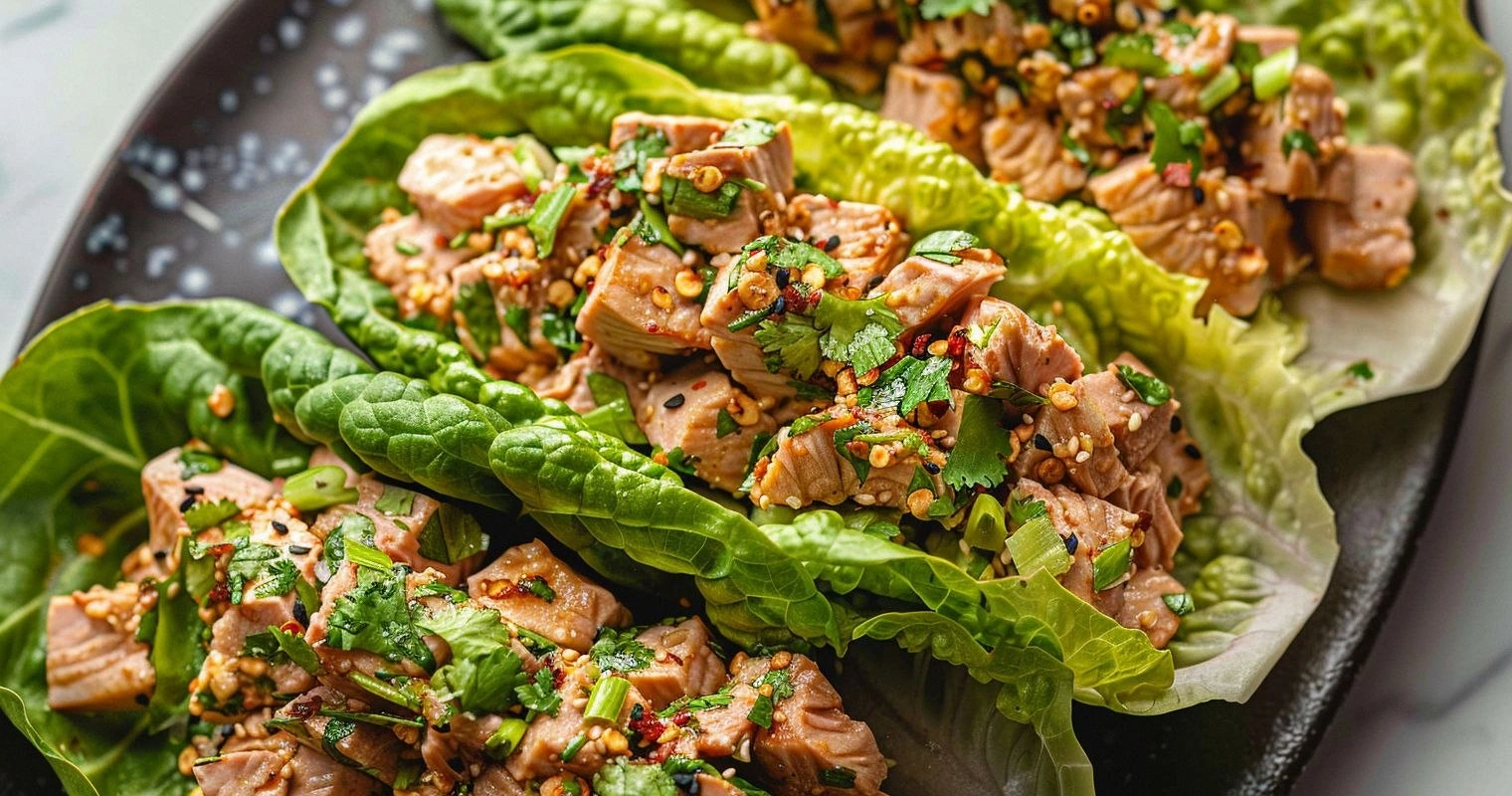
Picture this: crispy, ice-cold butter lettuce cups cradling a mixture so perfectly balanced between creamy and crunchy, spicy and fresh, that your brain literally short-circuits trying to categorize it. The tuna gets transformed with a blend of Asian-inspired ingredients that wake up every single taste bud, while the lettuce provides that satisfying snap that makes you feel like you're eating something way more indulgent than it actually is. That first bite? Pure revelation. The kind that makes you close your eyes involuntarily because your senses are so overwhelmed with deliciousness.
Okay, ready for the game-changer? The secret isn't just in what you mix with the tuna — it's in how you treat that can of fish like it deserves respect. We're talking about draining it properly (not just a lazy tilt over the sink), fluffing it with a fork until it's light and airy, then introducing it to flavors that make it forget it ever came from a shelf. By the time you're done, you'll have created something that tastes like it came from one of those trendy fusion restaurants where everything costs twenty-five dollars and comes with three pieces. Except this costs maybe three bucks and makes enough to feed your actual hunger, not just your Instagram feed.
What Makes This Version Stand Out
Flavor Explosion: Most tuna wraps taste like someone gave up on life and surrendered to blandness. This version hits you with layers of umami, brightness from fresh herbs, heat that builds slowly, and a creamy element that ties everything together like a perfectly orchestrated symphony. Each bite delivers a new note, keeping your palate engaged and your hand reaching for another wrap before you've even finished chewing.
Texture Paradise: Forget mushy, sad tuna salad that reminds you of hospital food. We're creating contrast here — the crunch of water chestnuts against the softness of perfectly dressed tuna, the snap of fresh lettuce against the creamy filling. It's like a textural playground where every element has been invited to the party for a specific reason.
Lightning Fast: From can-opener to table in under fifteen minutes, this recipe respects your time while delivering restaurant-quality results. Most recipes get this completely wrong by overcomplicating things. Here's what actually works: minimal ingredients, maximum impact techniques, and zero pretentious nonsense.
Meal Prep Champion: Make the filling on Sunday, and you've got grab-and-go lunches that actually make you excited for Monday. The flavors meld and intensify overnight, transforming into something even more magnificent. Future pacing: picture yourself pulling this container out of the office fridge while your coworkers poke sadly at their wilted salads.
Crowd Psychology: Serve these at a party and watch grown adults hover around the platter like it's the last food on earth. I've seen vegetarians break their diets for these wraps. That's not hyperbole — that's the power of making healthy food that doesn't taste like punishment.
Ingredient Quality: This recipe proves that canned tuna, when treated right, can taste like pure luxury. We're not masking the fish — we're elevating it to its highest potential. The difference between drowning it in mayo and coaxing out its natural sweetness is like the difference between a flip phone and the latest smartphone.
Global Fusion: Drawing inspiration from Vietnamese spring rolls, Japanese poke bowls, and Mediterranean flavors, this recipe creates something entirely new yet comfortingly familiar. It's like taking your taste buds on a world tour without leaving your kitchen.
Alright, let's break down exactly what goes into this masterpiece...
Inside the Ingredient List
The Flavor Base
The tuna is obviously the star here, but not all canned tuna is created equal. I'm talking about good-quality albacore packed in water, not that mystery mush that looks like cat food. You want solid chunks that you can actually flake into beautiful, meaty pieces. The water-packed variety lets you control the moisture level, ensuring your filling isn't swimming in liquid like some tragic seafood soup. Drain it like your life depends on it — press gently with the lid to squeeze out every last drop, then give it a quick paper towel pat for insurance.
Mayonnaise haters, stay with me here — we're using just enough to bind everything together, not drown it. Think of mayo as the diplomatic liaison between all our ingredients, helping them coexist peacefully. But here's the twist: we're cutting it with Greek yogurt for tang and protein, creating a lighter, more complex base that won't make you feel like you ate a brick. The ratio is crucial here — too much and your wraps become slippery messes, too little and everything falls apart like a bad relationship.
The Texture Crew
Water chestnuts are about to become your new obsession. These crunchy little miracles add a snap that makes each bite exciting, like finding treasure in your food. They stay crisp even after sitting in the mixture, providing that crucial textural contrast that separates amateur hour from professional results. Dice them small enough to distribute evenly but large enough to notice — think the size of your pinky nail. If you can't find water chestnuts, jicama works too, but honestly, make the effort to find the real deal.
Celery gets a bad rap from being overused in boring tuna salads, but when used judiciously, it adds a fresh, slightly bitter note that brightens everything. The key is slicing it paper-thin on the bias, exposing more surface area and making it less likely to stab your gums like angry little green swords. One rib is plenty — we're not making celery with tuna, we're making tuna enhanced by celery. There's a difference, and your palate will thank you for understanding it.
The Unexpected Star
Sriracha haters, I see you backing away slowly, but trust the process here. We're using just enough to add warmth, not set your mouth on fire like some macho hot sauce challenge. The chili-garlic-vinegar combo enhances the tuna's natural flavors while adding complexity that makes people ask, "What IS that?" Start conservative — you can always add more, but you can't un-spicy your mixture without starting over. If you've ever struggled with this, you're not alone — and I've got the fix: mix it with the mayo first, then taste. If it makes your eyebrows raise slightly, you've nailed it.
Fish sauce might seem like an odd addition, but it's the umami bomb that transforms this from "good" to "why can't I stop eating this?" Just a few drops add incredible depth without making it taste fishy — think of it as MSG's more sophisticated cousin. The trick is using it sparingly, like cologne on a first date. Too much and you're that person, but just enough and people know you've got secrets worth knowing.
The Final Flourish
Fresh herbs aren't optional here — they're essential for cutting through the richness and adding that "just made" brightness. Cilantro haters can sub with parsley, but honestly, cilantro's citrusy punch is what makes these wraps sing. Chop it roughly, not finely, so you get those beautiful green flecks that make the mixture look vibrant and alive. Add it at the very end to preserve its color and flavor, because nobody wants sad, wilted herbs in their food.
Lime juice is your secret weapon against blandness. It brightens every other ingredient while adding a subtle acidity that makes the flavors pop like they're in 3D. Use fresh lime — bottled juice tastes like disappointment and broken promises. One lime is usually perfect, but have a second on standby for that final adjustment that takes it from great to unforgettable. And now the fun part: when you squeeze that lime, do it over your hand so the seeds stay out of your mixture. Little techniques like this separate the pros from the pretenders.
Everything's prepped? Good. Let's get into the real action...
The Method — Step by Step
- Start with your mixing bowl from the freezer — it should be nice and frosty, like it just came back from a ski vacation. Add your drained tuna and immediately start flaking it with a fork, but here's the key: use a gentle, lifting motion rather than mashing. You want to create light, fluffy chunks, not tuna paste. Think of it as giving the fish a relaxing spa treatment rather than interrogating it for information. This step takes about two minutes, but it's crucial for the final texture. The sizzle when it hits the pan? Absolute perfection — except we're not cooking anything here, just building flavor.
- Now for the game-changer moment: add your mayo-Greek yogurt mixture, but don't just dump it in. We're going to fold it in like we're handling the most delicate silk scarf. Use a rubber spatula and make figure-eight motions, turning the bowl as you go. This distributes the creamy base evenly without crushing the tuna's structure. The goal is coating, not smothering — each piece should look like it got a light jacket, not a heavy winter coat. If you've ever struggled with this, you're not alone — and I've got the fix: add half, fold, then add more only if needed.
- Time for the aromatics and this next part? Pure magic. Add your minced garlic, grated ginger, and sliced scallions, but here's the pro move: save the green scallion tops for garnish. The white and light green parts go into the mixture for that oniony sharpness, while the dark green tops add fresh color at the end. Mix these in with the same gentle folding motion, distributing them like you're scattering seeds in a garden. Every bite should have a little bit of everything, not just one lucky winner.
- The sauce components come next, and this is where most recipes get it completely wrong. Instead of dumping everything in at once, we're building layers. Start with the sriracha-mayo mixture you made earlier, then add the fish sauce, sesame oil, and rice vinegar. But here's the secret: add them in that order, with a gentle fold between each one. This creates depth and prevents any single flavor from dominating. Taste after each addition — your palate is your best kitchen tool.
- Now for the crunch factor, and this is where things get exciting. Add your diced water chestnuts and celery, but first, wrap them in a paper towel and give them a gentle squeeze. Removing excess moisture prevents your mixture from getting watery after sitting. Fold these in with confidence — they're sturdy enough to handle it. The mixture should start looking like it's ready for prime time, with visible chunks and flecks of color throughout.
- Fresh herb time! But wait — don't add them yet. First, let the mixture sit for five minutes to let the flavors meld. This brief pause lets the salt dissolve, the acid distribute, and everything become friends. Then, and only then, add your chopped cilantro and give it one final, gentle fold. Add the lime juice at the same time, because citrus and herbs are best friends who should enter the party together.
- Lettuce prep is crucial and most people treat it like an afterthought. Wash your butter lettuce carefully, separating the leaves while keeping them whole. The key is drying them thoroughly — water is the enemy of crispy texture. Use a salad spinner, then lay them on paper towels and gently press. You're looking for leaves that snap when bent, not ones that droop sadly like they've given up on life.
- Assembly is where the magic happens, but don't rush it. Hold a lettuce cup in your non-dominant hand like it's a precious vessel. Add about two tablespoons of the tuna mixture — enough to be satisfying but not so much that it explodes when you try to eat it. The leaf should cup naturally, creating a little boat of deliciousness. If it tears, don't panic — just double up with another leaf. Nobody will judge you, and even if they do, you're the one holding the amazing food.
- The final flourish separates the amateurs from the professionals. A sprinkle of toasted sesame seeds adds nuttiness and visual appeal. A few extra cilantro leaves make it look fresh from a restaurant kitchen. If you're feeling fancy, add a thin slice of jalapeño for color and heat. But here's the thing — don't over-garnish. You want people to see the beautiful filling, not wonder where it is under a mountain of decorations.
That's it — you did it. But hold on, I've got a few more tricks that'll take this to another level...
Insider Tricks for Flawless Results
The Temperature Rule Nobody Follows
Cold ingredients are your best friend here, but there's a sweet spot that most recipes completely ignore. Your tuna mixture should be chilled, but your lettuce should be ice-cold. Store your lettuce in the coldest part of your fridge, preferably in the crisper drawer with a damp paper towel. The contrast between the cool, creamy filling and the crisp, cold lettuce is what makes these wraps irresistible. I dare you to taste this and not go back for seconds — the temperature contrast alone is addictive.
The filling, however, should be allowed to come to cool room temperature for about ten minutes before serving. Straight-from-the-fridge tuna mixture dulls your taste buds, masking the complex flavors we've worked so hard to build. Think of it like serving wine — too cold and you lose nuance, too warm and things get weird. That sliver of temperature difference is what separates good cooks from great ones, and once you experience it, you'll never go back to fridge-cold filling again.
Why Your Nose Knows Best
Before you even taste your mixture, smell it. Your nose can detect imbalances that your tongue will confirm. It should smell fresh, slightly tangy, with hints of ocean and herbs. If all you smell is fish, something's off — probably too much fish sauce or not enough acid. If it smells flat, add more lime. If it smells too sharp, a pinch of sugar will balance things out. This sensory checkpoint saves you from serving something that's technically correct but emotionally disappointing.
A friend tried skipping this step once — let's just say it didn't end well. She served her wraps at a book club meeting, and the mixture had too much fish sauce. Instead of admitting defeat, she watched politely as her guests took polite bites, then quietly wrapped the rest in napkins. Don't be that friend. Trust your nose, adjust accordingly, and serve with confidence knowing you've created something that makes people close their eyes in appreciation.
The 5-Minute Rest That Changes Everything
After mixing everything together, let your creation rest for exactly five minutes. Not ten, not two — five. This brief pause allows the salt to dissolve and distribute evenly, the acid to brighten the tuna, and the flavors to meld without becoming muddled. Set a timer, walk away, maybe pour yourself a drink. When you return, give it one final gentle fold and taste. The difference between freshly mixed and rested mixture is like the difference between a snapshot and a portrait — both capture the moment, but one has depth and character.
During this rest, something magical happens. The sriracha's heat mellows and spreads throughout, the fish sauce's funk integrates rather than dominates, and the herbs start releasing their oils. It's like watching a time-lapse of a garden blooming, except it's happening in your mixing bowl. This is hands down the best version you'll ever make at home, and this five-minute rest is a huge part of why.
Creative Twists and Variations
This recipe is a playground. Here are some of my favorite ways to switch things up:
The Mediterranean Vacation
Swap the sriracha for harissa, use preserved lemon instead of lime, and add chopped olives and sun-dried tomatoes. The mixture becomes sunnier, more rustic, like something you'd eat at a seaside taverna. Use romaine hearts instead of butter lettuce for that extra crunch that feels like you're biting into Mediterranean sunshine. A sprinkle of feta on top adds salty tang that makes the whole thing feel like vacation on a plate.
The Thai Heat Seeker
Add minced Thai chilies, swap the cilantro for Thai basil and mint, and use fish sauce as your primary salt source. A spoonful of coconut cream adds richness without heaviness, while a squeeze of tamarind paste adds complex sourness. This version builds heat slowly, like a Thai sunset — beautiful and warm, then suddenly intense. Serve with extra lime wedges because the brightness balances the heat perfectly.
The Japanese Minimalist
Replace the mayo with Kewpie Japanese mayonnaise, add a touch of wasabi, and use yuzu juice instead of lime. Mix in diced cucumber for freshness and top with togarashi for heat. This version is cleaner, more refined — like sushi's cool cousin who studied abroad and came back sophisticated. The flavors are subtle but persistent, making you appreciate each ingredient's contribution.
The Mexican Street Food
Add chipotle peppers in adobo sauce, swap the water chestnuts for jicama, and use lime with a touch of orange juice. Cilantro stays, but add Mexican oregano and a pinch of cumin. Serve with pickled red onions on top — the acid cuts through the richness while the pink color makes everything look festive. This version tastes like the best fish tacos you've never had, minus the fish.
The Indian Spice Route
Mix in a touch of mango chutney for sweetness, add curry powder and a pinch of garam masala, and use mint instead of cilantro. The warm spices transform the tuna into something exotic and comforting. A sprinkle of crispy chickpeas on top adds crunch while nodding to Indian street food. Even people who claim they don't like Indian food devour these wraps.
The California Healthy
Replace half the tuna with mashed avocado, add hemp seeds and hemp hearts, and use Greek yogurt exclusively. Load up on sprouts, use collard green leaves instead of lettuce, and add a drizzle of tahini on top. This version feels like something you'd pay fifteen dollars for at a trendy LA café, except it actually fills you up and doesn't require taking out a second mortgage.
Storing and Bringing It Back to Life
Fridge Storage
The filling keeps beautifully for up to three days in an airtight container, but here's the key: store it in the coldest part of your fridge, not the door. The door experiences temperature fluctuations every time it's opened, which can affect texture and safety. Press plastic wrap directly onto the surface before sealing the container — this prevents oxidation that causes that unappetizing gray layer. When stored properly, the flavors actually improve as they meld, making day-two wraps potentially even better than fresh ones.
Keep your lettuce separate, wrapped in damp paper towels inside a plastic bag with a few holes poked in it. This maintains humidity while allowing ethylene gas to escape, preventing premature wilting. If your lettuce starts looking sad, trim the stem ends and stand the leaves in ice water for ten minutes — they'll perk up like they just had a spa day. Never store lettuce with fruits that produce ethylene gas (apples, bananas, avocados) unless you want wilted sadness.
Freezer Friendly
While the filling can be frozen, the texture changes significantly — the vegetables become mushy and the mayo separates. If you must freeze, do it without the vegetables and add fresh ones after thawing. Freeze in portion-sized containers, leaving headspace for expansion. Thaw overnight in the fridge, then refresh with new crunchy vegetables and herbs. Honestly, though? This recipe is so quick that freezing seems like overkill unless you're making massive batches.
Best Reheating Method
These wraps are meant to be served cold, but if your filling has been stored and you want to refresh it, here's the trick: let it come to cool room temperature for about fifteen minutes. Cold dulls flavors, so this brief rest awakens everything. If it seems dry after storage, add a tiny splash of water and mix gently — it steams back to perfection. Add fresh herbs and a squeeze of lime to brighten everything up. The lettuce should always be served ice-cold for maximum contrast and crunch.