I still remember the first time I made slow cooker ham and bean soup. It was one of those bleak January afternoons where the sky looked like wet cement and my apartment felt colder than my ex's heart. I'd been gifted a massive ham bone from my neighbor's holiday dinner—this gnarly, prehistoric-looking thing wrapped in foil like some kind of meat artifact. My initial plan? Toss it in the trash and order pizza. But something about that bone, still clinging to stubborn bits of smoky meat, made me feel guilty about wasting what could be dinner. So I rummaged through my pantry, found a bag of navy beans that had been sitting there since the Obama administration, and thought, "How hard could this be?" Famous last words, my friends. What emerged eight hours later wasn't just soup—it was liquid comfort that made me understand why grandmothers everywhere guard their bean soup recipes like state secrets. The house smelled like I'd bottled autumn itself, and when I ladled that first spoonful—thick, creamy, with tender beans that practically dissolved on my tongue—I actually said "Oh my God" out loud to an empty kitchen. That moment? Pure kitchen magic. And now I'm handing you the keys to that same magic, minus my initial disasters involving burnt beans and soup that tasted like dishwater.
Here's the thing about most ham and bean soup recipes floating around the internet: they're lying to you. They promise rich, complex flavor but deliver something that tastes like someone waved a ham slice over hot water and called it a day. They tell you to dump everything in a pot and walk away, which is technically correct but spiritually criminal. The difference between mediocre bean soup and the kind that makes people propose marriage is all in the details—the way you treat that ham bone like the treasure it is, the moment you add certain ingredients, the patience to let those beans release their creamy starch into the broth. I learned this the hard way through three failed attempts where my soup tasted like punishment. But attempt number four? That's when everything clicked, and I discovered the techniques that turn humble ingredients into something that tastes like it came from a farmhouse kitchen where someone's Italian grandmother rules with an iron ladle.
What you're about to make isn't just dinner—it's a time machine back to Sunday suppers and conversations that stretch long after the dishes are done. The slow cooker does the heavy lifting, but there are a few crucial steps that transform this from "yeah, it's fine" to "holy cow, you MADE this?" I dare you to taste this and not go back for seconds. Actually, I dare you to taste this and not immediately start planning when you can make it again. The smoky depth, the way the beans become almost buttery, how the vegetables melt into the broth creating this velvety texture that coats your spoon like velvet—it's the kind of cooking that feels like alchemy. Stay with me here — this is worth it.
Let me walk you through every single step — by the end, you'll wonder how you ever made it any other way.
What Makes This Version Stand Out
Smoky Depth: Most recipes treat the ham bone like a garnish. We roast it first, releasing every bit of caramelized flavor, then slow-simmer it until the marrow melts into the broth. The result? A soup that tastes like it cooked in a smoker built inside a barn in Vermont.
Bean Perfection: Here's where most people mess up—they add salt too early and end up with pebbles instead of beans. We salt at the very end, letting the beans become impossibly creamy while maintaining their shape. The texture will make you weep.
Set-and-Forget Simplicity: After the initial fifteen minutes of prep, your slow cooker becomes a magical flavor factory. Go to work, binge Netflix, solve world hunger—whatever. Dinner's making itself while you live your life.
Leftover Goldmine: This soup actually improves over two to three days. The flavors marry, deepen, become more complex. Make a double batch and you'll have lunches that make coworkers jealous and significant others propose.
Pantry Paradise: Everything in here lives in your kitchen already—dried beans, that ham bone from Easter you're saving for "someday," basic vegetables. It's like this recipe was designed for the apocalypse, but in the best possible way.
Crowd Convincer: I've served this to people who "don't like bean soup" and watched them lick their bowls clean. It's that good. The smoky ham, the creamy beans, the way everything melds together—it's comfort food that converts skeptics.
Economic Hero: This entire pot costs less than a fancy coffee habit and feeds an army. We're talking pennies per serving for something that tastes like it came from a restaurant where they charge thirty dollars for "artisanal beans."
Make-Ahead Magic: Prep everything the night before, keep it in the slow cooker insert in the fridge, then just plug it in before work. Come home to a house that smells like you've been cooking all day. Because you have, technically.
Inside the Ingredient List
The Foundation Players
The dried navy beans are the heart and soul here—don't you dare reach for canned beans unless you want soup that tastes like disappointment. These little white beans cook down into something magical, releasing their starch to create a naturally creamy broth without any dairy. When you're buying them, look for beans that are uniform in size and color, with no wrinkled or broken pieces. Old beans take forever to cook and never quite achieve that buttery texture we're after. I've had beans in my pantry for three years that turned into gravel no matter how long I simmered them, so check those expiration dates like your dinner depends on it—because it does.
That ham bone isn't just flavor—it's the entire backbone of this operation. You want a bone that still has plenty of meat clinging to it, preferably with some of the fatty, collagen-rich bits that'll melt into the broth. If your butcher looks at you funny when you ask for a ham bone, tell them you want the shank end with the marrow intact. This isn't the time for a dainty little bone that's been picked clean. The more meat and connective tissue, the more flavor you'll extract. And here's what most recipes get wrong: they just toss it in raw. We're going to roast that bone first, getting it all caramelized and crispy, which is the difference between good soup and soup that makes angels sing.
The Aromatics Army
Onion, celery, and carrots aren't just filler—they're the aromatic trinity that builds the flavor foundation. Dice them small enough that they'll melt into the soup, but not so tiny that they disappear completely. I like to keep them about half-inch pieces, so they hold their shape but become tender enough to mash against the roof of your mouth. The onion adds sweetness, the celery brings a subtle bitterness that balances the richness, and the carrots contribute color and earthiness. Skip any of these and the soup tastes flat, like it's wearing beige and wants to talk about the weather.
Garlic is non-negotiable here, and I'm not talking about the pre-minced stuff in a jar that tastes like battery acid. You want fresh cloves that you mince yourself, releasing all those volatile compounds that make your kitchen smell like an Italian grandmother's embrace. Four cloves might seem like overkill, but trust me—this soup can handle it. The long cooking time mellows the garlic into this sweet, almost nutty flavor that permeates every spoonful.
The Seasoning Squad
Fresh thyme is worth seeking out—dried thyme tastes like dusty library books in comparison. The fresh stuff has these bright, almost lemony notes that lift the whole soup. Strip the leaves off the stems (save those woody stems for stock another day) and add them in the beginning so they have time to release their oils into the broth. Bay leaves are the unsung heroes here; they add this subtle, almost tea-like flavor that you can't quite identify but would miss if it were gone. Just remember to fish them out before serving—biting into a bay leaf is like eating a mouthful of pine needles.
Black pepper needs to be freshly ground. The pre-ground stuff has all the flavor of pencil shavings. You want those little specks that add heat and complexity without overwhelming the delicate ham flavor. And here's the crucial part: we salt at the very end. Adding salt too early will turn your beans into tiny rocks that never soften, no matter how long you cook them. It's tempting to season as you go, but resist. Your patience will be rewarded with beans that are creamy and tender, not tooth-breaking pellets.
The Liquid Gold
Chicken stock is better than water, but ham stock is better than both if you can find it. Some butcher shops will give you ham stock for free if you ask nicely and buy the ham bone. The stock adds another layer of meaty flavor that water just can't provide. If you're using store-bought chicken stock, go for the low-sodium variety—we want to control the salt level ourselves. The liquid needs to cover everything by about two inches, accounting for evaporation and the fact that the beans will absorb a shocking amount of liquid as they cook.
The Method — Step by Step
- Start by roasting that ham bone like it owes you money. Preheat your oven to 400°F, place the bone on a rimmed baking sheet, and let it go for 45 minutes until it's golden brown and the edges are crispy. Your kitchen will start smelling like a smokehouse, and that's when you know magic is happening. This step is what separates soup that tastes like ham-flavored water from soup that tastes like it's been simmering in a cavern of flavor for days. Don't skip this—it's the difference between amateur hour and professional results.
- While the bone is roasting, sort through your beans like you're panning for gold. Spread them on a baking sheet and pick out any stones, broken beans, or weird-looking pieces. Rinse them in a colander under cold water until the water runs clear. This isn't just about cleanliness—it's about removing any debris that could ruin the texture of your soup. I've found actual tiny rocks in beans before, and biting into one of those is a one-way ticket to a dentist's chair.
- Now the overnight soak—yes, it's necessary, no, you can't skip it. Place the beans in a large bowl and cover them with cold water by about three inches. They'll absorb water like tiny sponges, rehydrating so they cook evenly. This step prevents the "exploded bean" phenomenon where the outside turns to mush while the inside stays hard. Leave them on the counter overnight, and by morning they'll have doubled in size and look plump and ready for their transformation.
- Drain and rinse the soaked beans, then dump them into your slow cooker. Add the roasted ham bone (don't you dare discard those crispy bits stuck to the pan—scrape every last morsel into the pot). Toss in your diced onions, celery, carrots, garlic, thyme leaves, and bay leaves. These vegetables are going to melt down and become one with the broth, creating a flavor base that's deeper than your high school poetry. The aromatics will perfume your house for hours, making neighbors wonder what restaurant opened next door.
- Pour in your stock until everything is covered by about two inches of liquid. This seems like too much, but the beans will drink it up like they've been wandering the desert. Give everything a gentle stir, just enough to distribute the ingredients without disturbing the ham bone too much. Set your slow cooker to low for 8-10 hours or high for 5-6 hours. Walk away and let chemistry do its thing. The low and slow method is what transforms tough beans into buttery morsels and extracts every bit of flavor from that ham bone.
- About halfway through cooking, give the soup a gentle stir. The beans should be starting to break down slightly, thickening the broth naturally. If it looks too thick, add hot water or stock a half-cup at a time. If it's too thin, remove the lid for the last hour of cooking to let some liquid evaporate. This is where you become the soup whisperer, adjusting based on what you see. The broth should coat the back of a spoon but still be pourable.
- When the beans are tender and the broth has thickened, remove the ham bone to a cutting board. It should be falling apart, with meat practically jumping off. Shred any remaining meat with two forks, discarding the fat and connective tissue. Return the shredded ham to the pot and give it a good stir. Now—and only now—add salt to taste. Start with half a teaspoon, stir well, and taste. The soup might not need much salt if your ham was salty. Freshly ground black pepper goes in now too, along with any final adjustments.
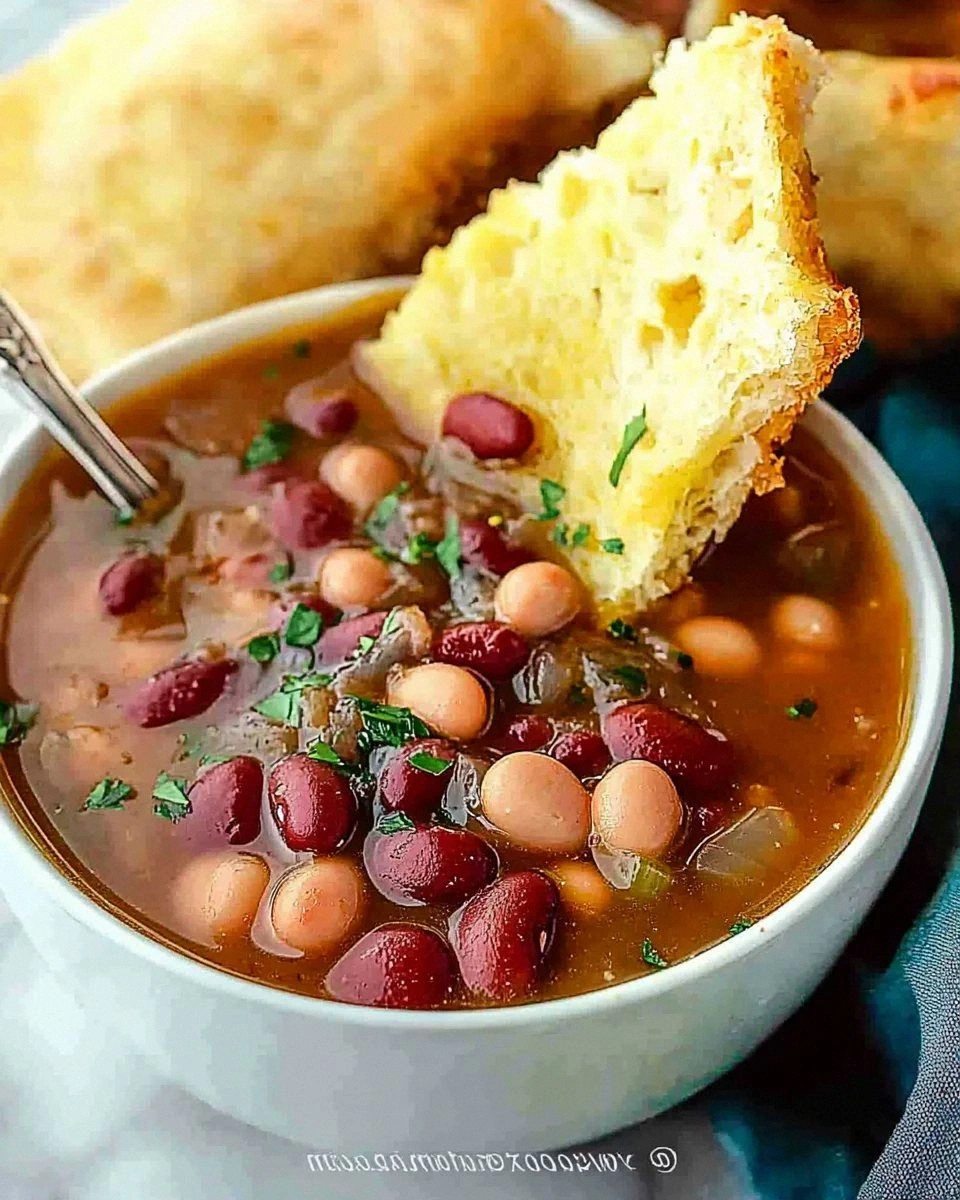
- For the final flourish, add a splash of apple cider vinegar or a squeeze of lemon juice. This isn't about making the soup sour—it's about brightening all those rich, smoky flavors. Think of it as turning up the contrast on a photograph. Suddenly all the subtle flavors pop, and the soup tastes more like itself. Serve hot, preferably with crusty bread for sopping up every last drop. The soup will continue to thicken as it cools, so if you're reheating leftovers, thin with a splash of water or stock.
That's it — you did it. But hold on, I've got a few more tricks that'll take this to another level...
Insider Tricks for Flawless Results
The Temperature Rule Nobody Follows
Here's what separates soup makers from soup artists: temperature control when serving. This soup should be served hot but not boiling—around 180°F if you're being precise. Too hot and you can't taste the subtle flavors, too cool and it tastes like yesterday's coffee. I keep a small ladle handy and taste from the edge of the pot where it's slightly cooler. The flavors bloom perfectly at the right temperature, and you'll notice nuances you never caught before. A friend served this lukewarm once and it tasted like bean-flavored library paste—temperature matters more than you think.
Why Your Nose Knows Best
Don't trust your eyes when determining if the beans are done—trust your nose. When this soup is perfectly cooked, your kitchen will smell like a farmhouse where someone's grandmother has been cooking for days. It's this rich, complex aroma that's both meaty and vegetal, with hints of thyme and something you can't quite identify. If you smell mostly ham and not much else, give it another hour. The beans release their starches slowly, creating that signature creamy texture that makes this soup legendary. I'll be honest — I ate half the batch before anyone else got to try it because the smell drove me absolutely crazy.
The 5-Minute Rest That Changes Everything
After the soup is done, turn off the heat and let it rest for five minutes before serving. This isn't just about avoiding burned tongues—it's about letting the flavors settle and marry. The beans continue to release starch, the herbs stop fighting for attention, and everything harmonizes. Think of it like letting a red wine breathe. Those five minutes transform good soup into soup that makes people close their eyes and sigh. I learned this trick from a chef who swore by it for all bean dishes, and he was absolutely right. Skip this step and your soup tastes like it's arguing with itself.
The Stirring Secret
Here's something counterintuitive: stir less, not more. Once everything's in the slow cooker, resist the urge to constantly check and stir. Every time you lift the lid, you're releasing steam and dropping the temperature, adding 15-20 minutes to your cooking time. Stir just twice: once halfway through to redistribute ingredients, and once at the end when you're checking for doneness. The beans need that consistent heat to break down properly. A friend tried stirring every hour and ended up with soup that took 14 hours to cook. The beans were confused, the broth was angry, and dinner was very, very late.
The Texture Test
Perfect bean soup texture is like a conversation between creamy and chunky. You want some beans intact for texture, but enough broken down to thicken the broth naturally. The test? Take a spoonful and blow on it gently. The broth should coat the back of the spoon but still drip off slowly. If it runs like water, cook another hour. If it stands up like pudding, you've gone too far. The ideal consistency is somewhere between soup and stew—what the French call "nappant," meaning it coats but doesn't coat too much. Picture yourself pulling this out of the oven, the whole kitchen smelling like you've been cooking since dawn, even though your slow cooker did all the work while you binge-watched your shows.
Creative Twists and Variations
This recipe is a playground. Here are some of my favorite ways to switch things up:
The Spicy Southwest Version
Add a diced chipotle pepper in adobo sauce and swap the thyme for oregano and cumin. Toss in a cup of corn kernels during the last hour and finish with fresh cilantro and a squeeze of lime. The smoky chipotle marries beautifully with the ham, creating a soup that tastes like it simmered in a Mexican grandmother's kitchen. Top with crushed tortilla chips and suddenly it's a whole different meal that makes people ask for the recipe in broken Spanish they learned from a cooking show.
The French Country Variant
Replace the navy beans with great Northern beans and add a bouquet garni of parsley, thyme, and bay leaf tied together with kitchen string. Splash in a bit of white wine during the last hour and finish with a pat of butter stirred in just before serving. Serve with crusty baguette and suddenly you're in a Provençal kitchen where someone named Pierre is pouring wine and speaking in rapid-fire French about the terroir of beans.
The Vegetarian Adaptation
Omit the ham bone and use vegetable stock instead. Add a sheet of kombu (dried seaweed) while cooking—it adds incredible umami depth that mimics meat. Smoked paprika and a dash of liquid smoke provide that missing smokiness. The result is so good that even devoted carnivores won't miss the meat. A friend who's a serious meat-lover tried this version and asked if I'd used some kind of "vegetarian ham." Victory.
The Italian Wedding Variation
Add a pound of Italian sausage, casings removed, browned and crumbled into the soup. Swap the thyme for basil and oregano, and add a handful of chopped kale during the last 30 minutes. The sausage fat adds richness, while the kale provides color and nutrition. Finish with grated Parmesan and suddenly it's not bean soup—it's Italian wedding soup's rustic cousin who tells better stories.
The Curry House Version
This sounds crazy but trust me: add a tablespoon of yellow curry powder and a teaspoon of turmeric. The earthy spices complement the ham in ways that make no sense until you taste it. Add coconut milk during the last hour for creaminess, and finish with fresh cilantro and a squeeze of lime. It's like someone took bean soup on vacation to Thailand and it came back with stories and souvenirs.
The Loaded Baked Potato Take
Add diced potatoes during the last two hours of cooking, then serve topped with shredded cheddar, sour cream, and chopped green onions. It's like someone turned a loaded baked potato into soup form, but with beans instead of potato chunks. The cheddar melts into the broth creating this creamy, tangy base that's completely addictive. Kids who won't touch regular bean soup will devour this version and ask for seconds.
Storing and Bringing It Back to Life
Fridge Storage
This soup keeps like a champ in the refrigerator for up to five days, but it thickens considerably as it cools. Store it in airtight containers—glass works best because it won't absorb odors like plastic. Leave about an inch of space at the top because the soup will expand slightly as it chills. The flavors actually improve after the first day, making this the perfect make-ahead meal for busy weeks. Pro tip: store individual portions in mason jars for grab-and-go lunches that make coworkers jealous and question their life choices.
Freezer Friendly
This soup freezes beautifully for up to three months, but here's the key: freeze it without the final salt adjustment. Salt intensifies during freezing and can make your soup taste like a salt lick upon reheating. Freeze in portion-sized containers or heavy-duty freezer bags laid flat to save space. Thaw overnight in the refrigerator, then reheat gently with a splash of water or stock to restore the perfect consistency. The beans might break down slightly more during freezing, but the flavor stays incredible. I've found soup in my freezer from six months ago that tasted like I'd just made it, proving that good things come to those who forget about their freezer stash.
Best Reheating Method
Gentle is the name of the game here. Reheat slowly over medium-low heat, stirring occasionally to prevent scorching. Add liquid a quarter-cup at a time until you reach the desired consistency—it should coat a spoon but still be pourable. Microwaving works in a pinch, but do it in 30-second bursts, stirring between each burst to prevent explosive bean situations. Whatever you do, don't reheat at a rolling boil or you'll end up with broken, mushy beans in grainy broth. The soup should come back to life creamy and fragrant, ready to comfort you all over again. Add a tiny splash of water before reheating — it steams back to perfection, and suddenly it's like you have a personal chef who specializes in bean alchemy.