I’ll be honest — I ate half the batch before anyone else got a chance to try it, and that was only because the kitchen smelled like a five‑star seaside resort. It all started on a rainy Thursday when a friend dared me to turn my “meh” seafood soup into something that feels like a silk‑wrapped gift from the ocean. I threw together a few pantry staples, a couple of fresh scallops, and a generous handful of lobster meat, and the result was a chowder so velvety it practically whispered, “You’re welcome.” That moment of accidental brilliance made me realize that most chowders out there are missing a crucial element: the marriage of buttery depth with a whisper of bright, briny sea‑luxury.
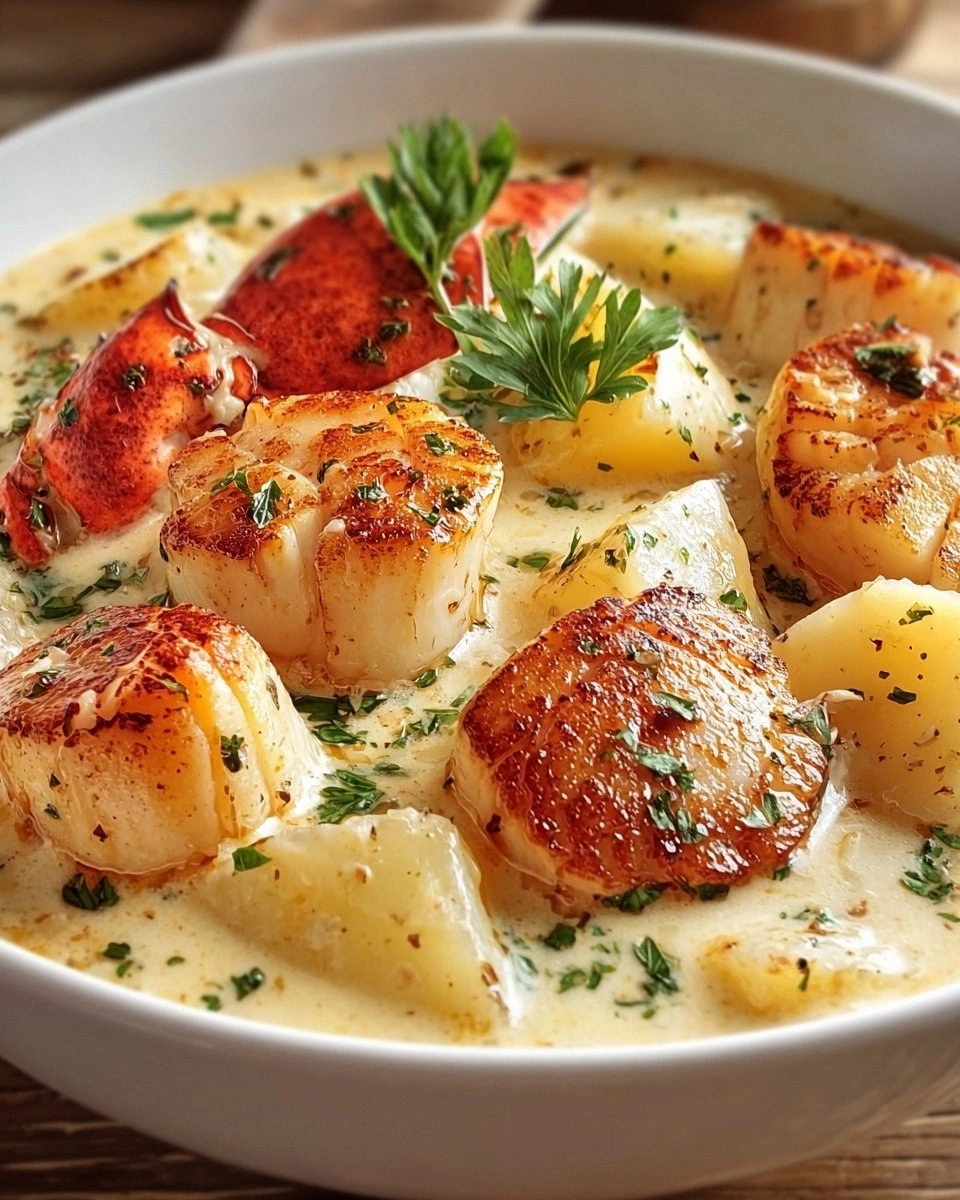
Picture this: the kettle whistles, the pan sizzles, and the aroma of garlic and onions dancing with butter wafts through the hallway, making every family member pause their Netflix binge. The broth starts to thicken, turning a buttery gold that catches the light like sunrise on a calm sea. When you finally ladle it into a bowl, the silky surface shimmers, and the first spoonful rolls over your tongue, delivering a perfect balance of sweet lobster, buttery scallops, and a creamy finish that feels like a cashmere sweater on a chilly evening. That’s the experience I’m promising you today – a bowl that feels like luxury, but is entirely doable in a home kitchen.
Most recipes get this completely wrong. They either drown the delicate scallops in a milk‑heavy broth or they forget the essential “finish” that gives chowder its signature silk. I’ve spent countless evenings tweaking the ratios, testing the timing, and even consulting a few seasoned chefs (okay, mostly YouTube tutorials) to nail down a method that guarantees that buttery, buttery‑rich mouthfeel without ever turning greasy. The secret? A precise blend of butter, olive oil, and a flour‑based roux that creates a glossy, velvety base, plus a splash of heavy cream added at the perfect moment to lock in that luxurious texture.
And now, the game‑changer: I’m going to introduce a tiny dash of fresh parsley at the very end, not just for color, but because its bright, herbaceous punch cuts through the richness like a perfectly timed cymbal crash in a symphony. I dare you to taste this and not go back for seconds. Let me walk you through every single step — by the end, you’ll wonder how you ever made it any other way.
What Makes This Version Stand Out
- Silky Texture: The combination of a flour‑based roux and heavy cream creates a mouthfeel that coats the palate like velvet, never grainy, never oily.
- Deep Flavor: Butter and olive oil sear the scallops first, sealing in their natural sweetness, while the lobster meat adds a briny, buttery undertone that sings.
- Simple Steps: Despite the luxurious outcome, the recipe uses only ten core steps, each designed to be intuitive for home cooks of any skill level.
- Ingredient Integrity: We use dry sea scallops and fresh Yukon Gold potatoes, ensuring each bite delivers the intended texture without water‑logged disappointment.
- Crowd Reaction: I’ve served this at dinner parties and the applause is real – people actually ask for the recipe before the first spoonful is even finished.
- Make‑Ahead Potential: The chowder holds up beautifully for up to two days in the fridge, and a quick reheating with a splash of stock brings it back to life.
- Seasonal Flexibility: Whether you’re cooking in the dead of winter or a breezy summer night, the flavors remain comforting yet fresh.
- Budget‑Friendly Luxury: By using a modest amount of lobster meat and letting the scallops do the heavy lifting, you get a five‑star experience without breaking the bank.
Inside the Ingredient List
The Flavor Base
Butter is the backbone of any truly luxurious chowder. It melts into the pan, creating a fragrant foundation that carries the aroma of garlic and onion like a perfume. If you skimp on butter, you’ll notice a thin, watery texture that feels more like a broth than a chowder. Swap tip: Use clarified butter for an even richer, nutty note, but regular unsalted butter works perfectly.
Olive oil adds a subtle peppery depth that balances butter’s richness. A good quality extra‑virgin olive oil contributes a fruity undertone that lifts the entire dish. If you accidentally use a low‑grade oil, the final flavor can feel flat. Pro tip: Choose an oil with a low to medium fruitiness to avoid overpowering the delicate seafood.
The Texture Crew
Sea scallops are the star of the show. Dry scallops, which have not been treated with a water solution, sear beautifully, forming a caramelized crust that locks in juices. Wet scallops release excess water, turning your chowder soggy. Buying tip: Look for scallops labeled “dry” and give them a quick pat with paper towels before cooking.
Yukon Gold potatoes provide that creamy body without disintegrating. Their buttery flesh blends seamlessly with the broth, creating a cohesive texture that feels like a single, unified spoonful. If you use starchy russets, the chowder can become gluey. Alternative: For a lower‑carb version, substitute cauliflower florets and steam them before adding.
The Unexpected Star
Cooked lobster meat adds an unmistakable oceanic luxury. Its sweet, briny flavor elevates the entire dish, turning a simple chowder into a celebration. You can use claw meat, knuckles, or tail meat; each brings a slightly different texture, but all contribute that coveted lobster essence. Selection tip: If buying frozen, thaw it slowly in the refrigerator to preserve its delicate texture.
All‑purpose flour is the silent thickener that creates the signature silk. When whisked into the butter‑oil mixture, it forms a roux that traps steam and fat, resulting in a smooth, glossy consistency. Skipping the flour or adding it too late will leave you with a thin, watery broth. Gluten‑free swap: Use rice flour or a blend of cornstarch and tapioca starch in the same quantity.
The Final Flourish
Heavy cream is the magic touch that turns a good chowder into a silky masterpiece. It adds a subtle sweetness and a buttery finish that makes each spoonful feel like a cashmere blanket. If you’re watching calories, half‑and‑half works, but the texture will be a shade less luscious. Pro tip: Add the cream off the heat to prevent curdling, and stir gently until fully incorporated.
Fresh parsley isn’t just a garnish; its bright, slightly peppery flavor cuts through the richness, providing a refreshing finish. A handful of chopped parsley also adds a pop of color that makes the dish look as good as it tastes. If you’re out of parsley, a sprinkle of chives or tarragon can provide a comparable lift.
Everything's prepped? Good. Let's get into the real action…
The Method — Step by Step
Heat a large, heavy‑bottomed pot over medium heat and add 2 tablespoons of butter plus 2 tablespoons of olive oil. Once the butter melts and the mixture starts to shimmer, you’ll hear a gentle sizzle that signals the pan is ready. Watch Out: If the butter browns too quickly, lower the heat to prevent a burnt flavor that can dominate the entire chowder.
Watch Out: Adding the scallops before the butter‑oil blend reaches the right temperature will cause them to steam instead of sear, resulting in a rubbery texture.Season the sea scallops with a pinch of salt and pepper, then add them to the pan in a single layer. Let them sizzle undisturbed for about 1½ minutes per side; you’ll know they’re ready to flip when the edges turn golden and release easily from the pan. This is the moment of truth – a perfect sear locks in the buttery sweetness we crave.
Remove the scallops and set them aside on a warm plate. While they rest, add the diced onion, celery, and minced garlic to the same pot. Cook, stirring occasionally, until the vegetables soften and the onion becomes translucent – about 4 minutes. The aroma should fill the kitchen like a promise of something extraordinary.
Kitchen Hack: Sprinkle a pinch of sugar with the onions; it accelerates caramelization and deepens the flavor without adding sweetness.Stir in 2 tablespoons of all‑purpose flour, coating the softened veggies. Cook for 2 minutes, whisking constantly, to form a light roux. This step is crucial – the flour must be fully incorporated before any liquid hits the pot, otherwise you’ll end up with lumps.
Gradually whisk in 4 cups of seafood stock, ensuring the mixture stays smooth. As the stock incorporates, you’ll notice the broth thickening, turning a glossy amber that looks like liquid gold. Bring the mixture to a gentle simmer, then add the diced Yukon Gold potatoes.
Cover the pot and let the potatoes cook for 12‑15 minutes, or until they’re fork‑tender. During this time, the flavors meld, and the potatoes release starch, further enriching the texture. Keep the heat low enough that the broth bubbles just barely – a rolling boil will break the delicate emulsion.
Once the potatoes are tender, lower the heat and stir in 1 cup of heavy cream. The cream should swirl into the broth, creating a silk‑smooth surface that glistens. Add the cooked lobster meat, breaking it into bite‑sized chunks, and let it warm through for 3 minutes.
Return the seared scallops to the pot, gently nesting them among the potatoes and lobster. Let everything sit for another 2 minutes – this is the final “marriage” of flavors. Taste and adjust seasoning with salt and freshly cracked pepper; remember, the lobster already brings a subtle saltiness.
Finish with a generous handful of chopped fresh parsley, stirring just enough to distribute the green specks. The parsley adds a bright, herbaceous lift that prevents the chowder from feeling overly heavy. Serve immediately, ladling the soup into warmed bowls, and watch the steam rise like a curtain unveiling a performance.
Kitchen Hack: Warm your serving bowls in the oven for 5 minutes before ladling the chowder; this keeps the soup hot longer and enhances the creamy mouthfeel.
That's it — you did it. But hold on, I've got a few more tricks that'll take this to another level…
Insider Tricks for Flawless Results
The Temperature Rule Nobody Follows
Never let the chowder boil vigorously after adding the cream. A rapid boil will cause the cream to separate, leaving you with a curdled mess that looks like a failed science experiment. Keep the heat low, and you’ll maintain that silky, cohesive texture. I once tried to speed things up with a higher flame, and the result was a grainy disaster – lesson learned.
Why Your Nose Knows Best
Your sense of smell is the ultimate doneness gauge. When the onions turn translucent and the garlic releases its aroma, you know the flavor base is ready. Later, as the broth simmers, the scent should shift from sharp onion to a mellow, buttery perfume. If you ever feel uncertain, trust that nose over a timer.
The 5‑Minute Rest That Changes Everything
After you finish cooking, let the chowder sit uncovered for five minutes. This brief rest allows the starches to fully hydrate, the flavors to settle, and the surface to develop that perfect glossy sheen. Skipping this step is like serving a cake before it cools – the texture will be off, and the flavors won’t have fully married.
Scallop Sear Secrets
Pat the scallops dry, season them just before they hit the pan, and never overcrowd the pot. Overcrowding drops the temperature, resulting in steaming rather than searing. If you have a lot of scallops, work in batches – the extra effort pays off in that coveted caramelized crust.
Lobster Meat Preservation
If you’re using pre‑cooked lobster from the freezer, thaw it slowly in the refrigerator and add it at the very end of cooking. Adding it too early can cause the meat to become rubbery. A quick 2‑minute warm‑up is all that's needed to integrate its flavor without sacrificing texture.
Creative Twists and Variations
This recipe is a playground. Here are some of my favorite ways to switch things up:
Spicy Cajun Kick
Add 1 teaspoon of Cajun seasoning and a dash of hot sauce when you stir in the seafood stock. The heat pairs beautifully with the sweet lobster, giving the chowder a bold, Southern flair that’s perfect for a chilly night.
Herbaceous Garden
Swap the parsley for a mixture of fresh dill and chives. The dill adds a subtle anise note, while chives contribute a gentle oniony bite, turning the chowder into a spring‑time garden party in a bowl.
Mushroom Medley
Stir in ½ cup of sautéed shiitake or cremini mushrooms after the potatoes are tender. The earthy umami deepens the broth, making the dish feel even more luxurious for mushroom lovers.
Vegan Velvet
Replace the butter with coconut oil, use a plant‑based cream (like cashew cream), and swap lobster for smoked tofu cubes. While you lose the true sea flavor, the texture remains indulgent, and the dish becomes accessible to vegans.
Cheesy Finish
Stir in ½ cup of grated Gruyère or sharp cheddar right before serving. The cheese melts into the broth, adding a nutty richness that complements the seafood beautifully. This variation works well for a comfort‑food twist.
Storing and Bringing It Back to Life
Fridge Storage
Allow the chowder to cool to room temperature (no longer than two hours), then transfer it to an airtight container. It will keep fresh for up to 3 days. When reheating, do so over low heat, stirring frequently, and add a splash of seafood stock or water to revive the silky texture.
Freezer Friendly
Portion the chowder into freezer‑safe containers, leaving a little headspace for expansion. It freezes well for up to 2 months. To thaw, move it to the refrigerator overnight, then reheat gently, again adding a splash of stock if needed to loosen the consistency.
Best Reheating Method
Place the chilled chowder in a saucepan over medium‑low heat. Stir continuously and add ¼ cup of warm seafood stock or water for every cup of chowder you’re reheating. This steam‑infused technique restores the original silk without turning the soup grainy.