I was standing in my kitchen on a rainy Tuesday, staring at a half‑cooked steak that had somehow turned into a rubbery slab, and a lone potato that looked like it had survived a war. The smell of burnt butter was wafting through the apartment, and I swear I heard the oven sigh in disappointment. That moment of culinary defeat sparked a dare from my roommate: “Make something that could feed an army and still look pretty enough for Instagram.” I laughed, rolled up my sleeves, and set out to prove that a single dish could be both comfort food royalty and a show‑stopper on a dinner table. Fast forward a few hours, and I’ve crafted a Loaded Steak Potato that makes the humble spud feel like it’s been knighted by a master chef.
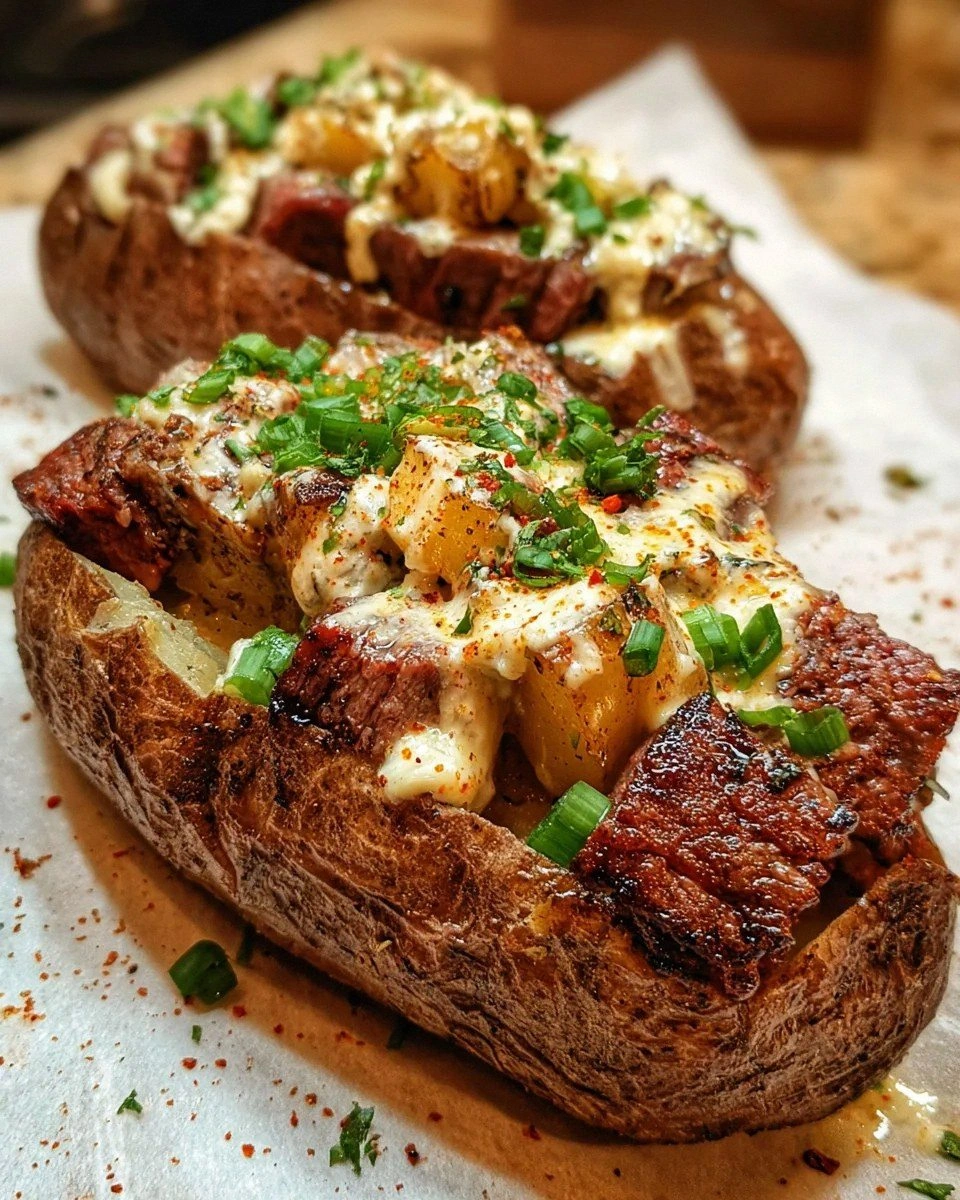
Picture this: a golden‑brown potato skin that cracks open with a gentle press, revealing a fluffy interior that’s been butter‑kissed and seasoned to perfection. Inside, tender cubes of steak mingle with smoky bacon, all smothered under a blanket of melted cheddar that stretches like a lazy cat in the sun. A dollop of cool sour cream sits on top, dotted with fresh chives that add a pop of green and a hint of oniony bite. The whole thing is finished with a dusting of smoked paprika that gives a subtle heat and a gorgeous, rustic hue. That sizzle when the steak hits the pan? Absolute perfection, and it’s the kind of sound that makes you want to shout “I’ve got this!”
Most recipes for loaded potatoes either drown the potato in toppings or treat the steak as an afterthought, leaving you with a soggy mess or a bland bite. This version flips the script by giving the potato a starring role, treating it like a canvas, while the steak and bacon act as bold brushstrokes that add depth, texture, and that unmistakable umami punch. I’m not just talking about tossing everything together; I’m talking about layering flavors, timing each component so that the potato stays crisp on the outside and pillowy inside, and using a finishing technique that makes the cheese melt into a glossy, buttery sheen. If you’ve ever struggled with soggy potatoes or overcooked steak, you’re not alone — and I’ve got the fix.
But wait, there’s a secret weapon in this recipe that most people overlook: a quick flash‑roast of the potato halves before the toppings even get near. This step creates a caramelized crust that locks in moisture, ensuring every bite has that satisfying crunch you crave. I dare you to taste this and not go back for seconds; it’s hands down the best version you’ll ever make at home. Let me walk you through every single step — by the end, you’ll wonder how you ever made it any other way.
What Makes This Version Stand Out
- Flavor Fusion: The marriage of smoky bacon, juicy steak, and sharp cheddar creates a symphony of taste that sings with every bite.
- Texture Contrast: Crispy potato skins meet buttery interiors, while the steak provides a meaty chew and the cheese adds a silky melt.
- Simplicity: Despite the gourmet vibe, the ingredient list is pantry‑friendly and the steps are straightforward.
- Unique Technique: Flash‑roasting the potatoes before assembling locks in moisture and builds a caramelized crust.
- Crowd Reaction: Serve this at a game night and watch the crowd disappear into the dish, forks clanking like applause.
- Ingredient Quality: Using a well‑marbled sirloin ensures each steak cube stays juicy, while a good cheddar melts without separating.
- Cooking Method: Oven‑roasting for even heat, followed by a quick stovetop finish for that perfect cheese‑pull.
- Make‑Ahead Potential: Prep the potatoes and toppings ahead of time; the final assembly takes just minutes.
Alright, let's break down exactly what goes into this masterpiece...
Inside the Ingredient List
The Flavor Base
Sirloin steak is the heart of this dish. Its natural marbling provides a buttery richness that plain cuts simply can’t match. If you skip the steak, you lose that deep, beefy umami that makes each bite feel indulgent. For a budget‑friendly swap, use ribeye or even a well‑trimmed flank steak, but keep the cubes small so they cook quickly and stay tender. When shopping, look for a steak with a bright red color and fine white marbling; avoid any that looks gray or has large fat pockets.
The Texture Crew
Russet potatoes are the MVP here because their high starch content yields a fluffy interior while the skin crisps up beautifully. A waxy potato would stay too firm and never develop that melt‑in‑your‑mouth center. If you can’t find russets, Yukon Golds work in a pinch, but expect a slightly creamier texture. The bacon adds a salty crunch that contrasts the soft potato and steak; cooking it until extra crisp ensures it won’t turn soggy when mixed with the sour cream later.
The Unexpected Star
Smoked paprika isn’t just for color; it introduces a subtle smoky depth that echoes the bacon and steak without overpowering them. This spice can be the difference between a flat flavor profile and a layered, complex bite. If you’re daring, try a pinch of chipotle powder for a hint of heat, but remember: a little goes a long way. Fresh chives, added at the very end, bring a bright, oniony lift that cuts through the richness, keeping the dish from feeling heavy.
The Final Flourish
Cheddar cheese is the gooey crown jewel, melting into a glossy veil that binds the toppings together. Opt for a sharp cheddar for a tangy bite; a milder cheese will melt smoother but lack that punch. Sour cream adds a cool, creamy tang that balances the heat from the paprika and the salt from the bacon. A drizzle of melted butter over the potato skins just before serving adds a glossy finish and a buttery aroma that makes the whole dish irresistible.
Everything's prepped? Good. Let's get into the real action...
The Method — Step by Step
Start by scrubbing four large russet potatoes under cold water, then pat them dry with a kitchen towel. Pierce each potato a few times with a fork to allow steam to escape during baking. Place them directly on the oven rack of a preheated 425°F (220°C) oven and roast for 45‑50 minutes, until the skins are crisp and a fork slides in with a little resistance. While they roast, the kitchen will fill with a comforting earthy aroma that sets the stage for the flavors to come.
Kitchen Hack: Flip the potatoes halfway through the bake; this ensures both sides get an even caramelized crust.While the potatoes are in the oven, heat two tablespoons of olive oil in a large cast‑iron skillet over medium‑high heat. Toss in the diced sirloin steak, seasoning with one teaspoon of kosher salt and half a teaspoon of freshly cracked black pepper. Let the steak sear without stirring for about two minutes, then flip and cook another two minutes; you’re looking for a deep brown crust that signals the Maillard reaction is in full swing. Add the minced garlic and smoked paprika, stirring just until fragrant—about 30 seconds. This is the moment of truth: the steak should be browned on the outside but still pink in the center.
While the steak rests, crumble four strips of cooked bacon into a small bowl. If you like extra crispness, return the bacon bits to the pan for a quick 30‑second blast over high heat; this removes any lingering grease and intensifies the smoky flavor. Then, in the same skillet, melt one tablespoon of butter and toss in the chives for a quick 10‑second sauté—just enough to release their aroma without wilting them completely.
When the potatoes are done, remove them from the oven and let them cool just enough to handle. Slice each potato lengthwise, being careful not to cut all the way through; you want a hinge that stays attached. Using a spoon, gently scoop out a generous amount of the fluffy interior, leaving about a ¼‑inch border of potato flesh attached to the skin. This creates a small “boat” that will hold all the decadent toppings.
Watch Out: Don’t over‑scoop the potato; leaving a thin wall prevents the skins from collapsing under the weight of the toppings.Now comes the flash‑roast: return the hollowed potato skins to the oven (still at 425°F) for an additional 8‑10 minutes. This short burst of high heat turns the inner surfaces golden and adds a subtle crunch that will hold up against the moist toppings. Keep an eye on them; you want a deep amber hue, not a burnt edge.
While the skins finish, combine the scooped‑out potato flesh with a dollop of sour cream, a pinch of salt, and a splash of butter. Mash lightly—just enough to create a creamy base that will blend seamlessly with the steak and bacon later. This step adds an extra layer of richness that makes each bite feel like a decadent comfort hug.
Remove the potato skins from the oven and start layering: first, a spoonful of the creamy potato‑sour‑cream mixture, then a generous heap of the seared steak cubes, followed by the crispy bacon crumbs. Sprinkle one cup of shredded sharp cheddar evenly over the top; the cheese will melt into a glossy, buttery blanket as it returns to the oven.
Kitchen Hack: For an ultra‑cheesy pull, add half the cheese before the final bake and the remaining half after, then broil for 1‑2 minutes to get those perfect golden specks.Place the assembled potatoes back into the oven for a final 5‑7 minutes, just until the cheese is melted and bubbling. If you love a little extra char, switch the oven to broil for the last 30 seconds—watch closely, because the cheese can go from molten gold to burnt in an instant.
Pull the potatoes out, drizzle a tiny pat of melted butter over each, and finish with a sprinkle of fresh chives and an extra pinch of smoked paprika for color. Let them sit for two minutes; this short rest allows the flavors to meld and the steam to settle, giving you that perfect bite‑ready texture. Serve immediately, and watch as the crowd dives in, forks clanking like applause at a concert.
That's it — you did it. But hold on, I've got a few more tricks that'll take this to another level...
Insider Tricks for Flawless Results
The Temperature Rule Nobody Follows
Most home cooks bake potatoes at 350°F, assuming a slower roast yields a softer interior. In reality, a hot 425°F oven creates a rapid steam burst inside the potato, puffing the flesh up like a balloon while the skin crisps instantly. I once tried the low‑and‑slow method, and the result was a soggy mess that fell apart when I added the toppings. Trust the high heat, and you’ll get that perfect contrast between a crunchy shell and a fluffy core.
Why Your Nose Knows Best
When the steak is searing, you’ll notice a fragrant, nutty aroma rising from the pan—that’s the Maillard reaction kicking in. If you don’t hear that subtle hiss and smell that toasted note, the heat is too low, and the meat will steam rather than sear. Keep your eyes on the color change; a deep caramel brown is the visual cue that the flavor is building.
The 5‑Minute Rest That Changes Everything
After searing, let the steak rest for five minutes before chopping. This short pause allows the juices to redistribute, preventing a dry bite when you mix the cubes into the potato. I once skipped this step in a rush, and the steak turned into a collection of dry, flavor‑less fragments. A quick rest is a game‑changer you’ll thank yourself for later.
Butter‑Basted Finish
A final brush of melted butter over the potato skins right before serving adds a glossy sheen and a buttery perfume that elevates the dish from good to unforgettable. Use a pastry brush and drizzle just enough to coat—too much will make the skins soggy.
Layering Cheese for Maximum Pull
If you love that stretchy cheese pull, don’t dump all the cheddar at once. Sprinkle half before the final bake, then add the remaining half after you pull the potatoes out, and give them a quick broil. The result is a double‑layered cheese effect: a gooey melt underneath and a crisp, golden top.
Creative Twists and Variations
This recipe is a playground. Here are some of my favorite ways to switch things up:
Tex‑Mex Explosion
Swap the sirloin for seasoned ground beef, add a spoonful of black beans, and replace cheddar with pepper jack. Top with guacamole and a squeeze of lime for a fiesta in every bite. Perfect for game night when you want a little extra kick.
Mediterranean Delight
Use cubed lamb instead of steak, crumble feta cheese over the top, and finish with a drizzle of tzatziki and a sprinkling of oregano. The herbaceous notes and tangy yogurt balance the richness beautifully.
Veggie‑Heavy Version
Leave out the meat entirely and double the potato mash, adding sautéed mushrooms, caramelized onions, and roasted red peppers. Top with smoked gouda for that deep, nutty flavor. Even the most dedicated carnivores will be impressed by the depth.
Spicy Korean Twist
Marinate the steak in gochujang and soy sauce, then garnish with kimchi, toasted sesame seeds, and a drizzle of sriracha mayo. The sweet‑spicy profile adds a bold new dimension to the classic.
Breakfast‑For‑Dinner
Add a fried egg on top of each potato, sprinkle with extra chives, and swap the cheddar for sharp cheddar‑white cheddar blend. The runny yolk becomes a luscious sauce that mingles with the sour cream, turning brunch into dinner.
Storing and Bringing It Back to Life
Fridge Storage
Place any leftovers in an airtight container and refrigerate for up to three days. Keep the cheese separate if you plan to reheat, as it can become rubbery when stored with the potatoes. When ready to eat, reheat in a 350°F oven for 15‑20 minutes, adding a splash of water to the pan to generate steam and restore that fluffy interior.
Freezer Friendly
These potatoes freeze beautifully. Wrap each assembled potato tightly in foil, then place them in a freezer‑safe bag. They’ll keep for up to two months. To reheat, thaw overnight in the fridge, then bake at 375°F for 25‑30 minutes, finishing with a quick broil to re‑crisp the tops.
Best Reheating Method
For the ultimate reheated bite, use a skillet: add a teaspoon of butter, place the potato skin side down, and cover for 4‑5 minutes. The bottom will crisp up while the interior steams back to perfection. A tiny splash of water before covering creates a gentle steam that revives the fluffy interior without drying it out.