I was halfway through a midnight snack of stale bagels when my phone buzzed with a text from my best friend: “You need a protein-packed veggie fix, or I’m sending you a salad that’s literally just lettuce.” I stared at the screen, realizing my pantry had more tofu than a tofu factory. The idea hit me like a lightning bolt—what if I could combine tofu, chickpeas, and a rainbow of veggies into one sheet pan masterpiece that would make my taste buds do a happy dance? The kitchen smelled of fresh herbs, a faint tang of soy sauce, and the promise of something delicious. I grabbed my apron, and the next thing I knew, I was drafting a recipe that would become the talk of our dinner table.
Picture this: a sheet pan loaded with golden, caramelized edges that crackle like thin ice under a winter sun. The tofu, pressed and sliced, takes on a buttery texture that melts in your mouth, while the chickpeas add a subtle nutty crunch. Mixed vegetables—think bell peppers, zucchini, and sweet potatoes—bloom into a colorful medley that looks almost too pretty to eat. The sauce, a simple blend of olive oil, soy sauce, and a whisper of smoked paprika, coats every morsel like velvet, creating a savory glaze that’s impossible to resist. If you’ve ever struggled with bland tofu or overcooked veggies, this recipe is your new go-to solution.
I dare you to taste this and not go back for seconds. The first bite is a burst of umami, followed by the gentle snap of vegetables, and the last note is the nutty finish from hemp seeds and almonds. This is hands down the best version you’ll ever make at home because every ingredient is elevated, and the method ensures that nothing gets soggy or underseasoned. I’ll be honest—I ate half the batch before anyone else got to try it. Most recipes get this completely wrong by overcooking the tofu or under-seasoning the chickpeas. Here’s what actually works.
Picture yourself pulling this out of the oven, the whole kitchen smelling incredible, and the family lining up for a taste test. The aroma is so inviting that even the dog stops by the door, tail wagging, hoping for a crumb. The sizzle when the tofu hits the pan is absolute perfection, a cue that the cooking is on point. And when you lift the sheet pan, the golden edges are crisp, the vegetables are tender yet firm, and the tofu is perfectly browned. And now the fun part: let me walk you through every single step—by the end, you’ll wonder how you ever made it any other way.
What Makes This Version Stand Out
- Taste: The combination of soy sauce, smoked paprika, and nutritional yeast creates a savory depth that feels like a sauce coating the pasta like velvet.
- Texture: The tofu crisps up to a buttery interior while the veggies stay tender yet firm, providing a satisfying bite that shatters like thin ice.
- Protein Power: With tofu, chickpeas, hemp seeds, and nuts, this dish packs 25 grams of protein per serving, making it a powerhouse for muscle recovery.
- Flavor Complexity: The subtle sweetness of the veggies is balanced by the umami of soy sauce and the nutty finish of almonds, creating a layered flavor profile.
- One-Pan Simplicity: All ingredients cook together, eliminating clean-up and ensuring that every flavor melds beautifully.
- Make-Ahead Friendly: The dish can be prepped ahead of time and reheated without losing its crunch or flavor.
- Kid-Friendly: The mild spices and sweet veggies make it a hit with picky eaters, while the protein keeps them full.
- Health Conscious: Low in saturated fat, high in fiber, and free from refined sugars, it fits perfectly into a clean eating routine.
Inside the Ingredient List
The Flavor Base
Soy sauce or tamari is the backbone of this dish, providing umami and a slight salty kick that permeates every bite. If you’re vegan or sensitive to sodium, swap for low-sodium soy sauce and add a splash of rice vinegar for brightness. Skipping this step would leave the tofu and veggies feeling flat; the sauce is what ties the flavors together. A small pinch of sesame oil can be added for a nutty aroma, but it’s optional.
The olive oil isn’t just for cooking—it helps the spices coat the tofu and vegetables evenly, ensuring a caramelized finish. Use a light olive oil to avoid overpowering the other flavors. If you prefer a different oil, avocado or grapeseed works nicely. The oil also helps the sheet pan stay non-stick, saving you from scrubbing.
Smoked paprika adds a subtle smokiness that elevates the dish without the need for a grill. If you don’t have smoked paprika, regular paprika works, but you’ll miss that smoky undertone. A dash of cayenne can add a mild heat if you’re feeling adventurous. The paprika also gives the vegetables a beautiful, warm hue.
The Texture Crew
Extra-firm tofu is the star of this sheet pan. Its dense texture holds up during roasting, giving you that desirable bite. When pressing the tofu, aim for a firm yet slightly pliable texture; over-pressing can make it too dry. If you’re using tempeh instead, slice it thinly to ensure it cooks evenly.
Chickpeas add a pleasant chew and a nutty undertone. Drain and rinse them thoroughly to remove excess sodium from the can. If you prefer a more robust flavor, sauté the chickpeas in a pan with a bit of oil before adding them to the sheet pan. Skipping chickpeas would reduce the protein content and make the dish feel less substantial.
Mixed vegetables bring color, crunch, and a variety of nutrients. Choose a mix that includes both quick-cooking veggies like zucchini and longer-cooking ones like sweet potatoes. Toss them in a little oil and spices before roasting to ensure even caramelization. If you’re short on time, use frozen mixed vegetables, but fresh is always better for texture.
The Unexpected Star
Nutritional yeast is a game-changer, adding a cheesy, savory flavor without dairy. It also boosts the protein content and provides a dose of B-vitamins. Sprinkle it generously over the vegetables before roasting so it adheres well. If you’re allergic to yeast, try a vegan cheese alternative.
Hemp seeds and chopped almonds or walnuts provide a crunchy contrast and a nutty finish. They also add healthy fats and omega-3s. Toast the nuts lightly before adding for extra flavor, but be careful not to burn them. If you’re avoiding nuts, simply omit them; the dish remains delicious.
The Final Flourish
A dash of dried oregano brings herbal brightness that cuts through the richness of the tofu and chickpeas. Use it sparingly; too much can overwhelm the subtle flavors. If you prefer a fresh herb, basil or parsley works nicely after baking. The final flourish is what gives the dish that restaurant-quality finish.
Everything’s prepped? Good. Let’s get into the real action.
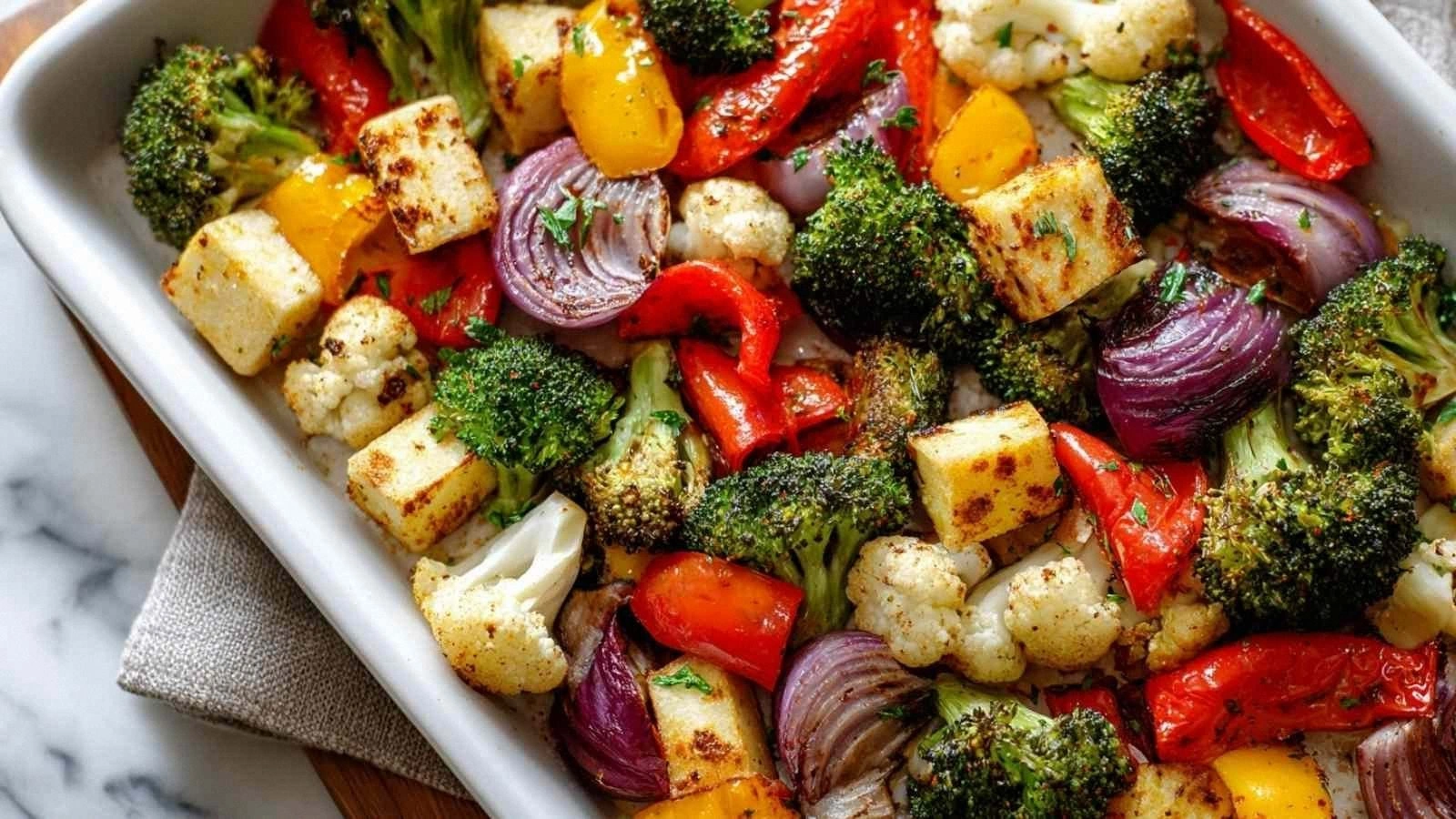
The Method — Step by Step
- Preheat your oven to 425°F (220°C). Line a large sheet pan with parchment paper or a silicone mat to prevent sticking. Place the sheet pan in the oven to heat up while you prep the rest of the ingredients.
- Press the tofu between paper towels and a heavy skillet for at least 10 minutes to remove moisture. Slice the tofu into ½-inch cubes and set aside. This step is crucial for achieving a golden, crispy surface.
- Drain and rinse the canned chickpeas. Pat them dry with a clean towel; excess water will cause steaming rather than roasting.
- In a small bowl, whisk together olive oil, soy sauce, garlic powder, onion powder, smoked paprika, dried oregano, salt, and pepper. Taste the sauce; it should have a balanced umami profile with a hint of spice.
- Toss the tofu, chickpeas, and mixed vegetables in the sauce until everything is evenly coated. The coating should cling to each piece like a glossy glaze.
- Spread the coated mixture in a single layer on the preheated sheet pan. Avoid overcrowding; the vegetables need space to caramelize.
- Bake for 25 minutes, then flip the mixture with a spatula. The flipping helps the tofu and veggies brown evenly.
- Return the pan to the oven and bake for an additional 10 minutes, or until the tofu edges are crisp and the vegetables are tender yet firm.
- Remove the pan from the oven and sprinkle nutritional yeast, hemp seeds, and chopped nuts over the hot mixture. The residual heat will toast the seeds and nuts, releasing their flavors.
- Let the dish rest for 5 minutes before serving. This short rest allows the flavors to settle and the tofu to firm up slightly.
That’s it—you did it. But hold on, I’ve got a few more tricks that’ll take this to another level.
Insider Tricks for Flawless Results
The Temperature Rule Nobody Follows
Many home cooks bake at a lower temperature, causing the tofu to steam rather than crisp. I’ve found that 425°F (220°C) is the sweet spot for caramelization without burning. If your oven runs hot, reduce the temperature to 400°F (200°C) and extend the baking time by 5 minutes. This ensures even roasting and a golden finish.
Why Your Nose Knows Best
The first scent that rises from the pan is the most telling indicator of doneness. When the tofu starts to emit a nutty, slightly burnt aroma, it’s time to flip. This olfactory cue helps you avoid overcooking and keeps the veggies from turning mushy. Trust your nose—your senses are the ultimate judge.
The 5-Minute Rest That Changes Everything
Resting the dish for 5 minutes after removing it from the oven allows the tofu to firm up slightly and the flavors to meld. The residual heat continues to cook the tofu, giving it a perfect bite. Skipping the rest step can leave the tofu too soft and the sauce too runny.
The Salt-and-Pepper Balance
Seasoning the tofu and veggies before roasting is crucial. Too much salt can cause the tofu to become mushy; too little can leave the dish flat. I recommend adding a pinch of salt, letting the tofu absorb it, then adding a dash of pepper for a subtle kick. The right balance elevates every bite.
The Quick Toss Trick
Tossing the tofu and veggies in the sauce just before baking ensures even coating. If you pre-mix everything, the sauce can clump and not spread evenly. A quick toss in a large bowl or a zip-top bag just before roasting gives you a glossy finish and uniform seasoning.
The Nutritional Yeast Boost
Sprinkling nutritional yeast at the end of baking adds a cheesy, umami depth that’s irresistible. It also enriches the dish with B12 and protein. If you’re vegan, this is the perfect way to add a savory note without dairy.
Creative Twists and Variations
This recipe is a playground. Here are some of my favorite ways to switch things up:
Mediterranean Medley
Swap the mixed vegetables for a mix of cherry tomatoes, olives, and artichoke hearts. Add a splash of lemon juice and a handful of fresh basil after baking. This version delivers a bright, citrusy finish that pairs well with a side of quinoa.
Spicy Sriracha Kick
Add 1 tablespoon of sriracha to the sauce for a fiery punch. Toss the tofu with a handful of crushed red pepper flakes before roasting. The heat is balanced by the nutty tofu and the sweet vegetables.
Southwest Fusion
Introduce cumin, coriander, and a dash of chipotle powder to the sauce. Replace the mixed vegetables with corn and black beans. Top with a dollop of Greek yogurt or a drizzle of lime crema for a creamy finish.
Herb-Infused Delight
Replace the dried oregano with a mix of rosemary, thyme, and parsley. Finish the dish with a squeeze of fresh lemon after baking. The herbs elevate the flavor profile and add a fragrant aroma.
Breakfast Boost
Serve the sheet pan on a bed of scrambled eggs or a vegan scramble. Add a handful of spinach and a sprinkle of nutritional yeast. This makes for a protein-packed breakfast that keeps you full until lunch.
Asian-Inspired Twist
Use a mixture of sesame oil and rice vinegar in place of olive oil. Add sliced bok choy and snap peas to the vegetable mix. Finish with a sprinkle of toasted sesame seeds for a nutty crunch.
Storing and Bringing It Back to Life
Fridge Storage
Cool the dish completely before transferring it to an airtight container. Store it in the refrigerator for up to 4 days. When you’re ready to eat, reheat in the microwave for 2 minutes, or for a crispier result, transfer to a preheated oven at 350°F (175°C) for 10 minutes.
Freezer Friendly
Pack the dish in freezer-safe containers or zip-top bags, leaving a small air pocket. Freeze for up to 2 months. To thaw, leave it overnight in the fridge, then reheat as described above.
Best Reheating Method
Add a splash of water or broth before reheating to keep the tofu from drying out. Microwave on medium power for 90 seconds, then stir. If you’re using the oven, a quick 5-minute blast at 350°F (175°C) will revive the crispness.