Picture this: a cold, rain‑soaked evening, the wind howling outside like a disgruntled choir, and you’re stuck in the kitchen with a pot that’s about to become the most comforting thing you’ve ever tasted. I was in that exact moment last week, half‑heartedly attempting a classic lasagna, when the sauce decided to stick to the pan and the noodles turned into a sad, mushy mess. I dared my roommate to taste it, and she promptly fled the kitchen, shouting, “I’ll be honest — I ate half the batch before anyone else got to try it!” That disaster sparked a revelation: why not turn the beloved layers of lasagna into a soup that hugs you from the inside out?
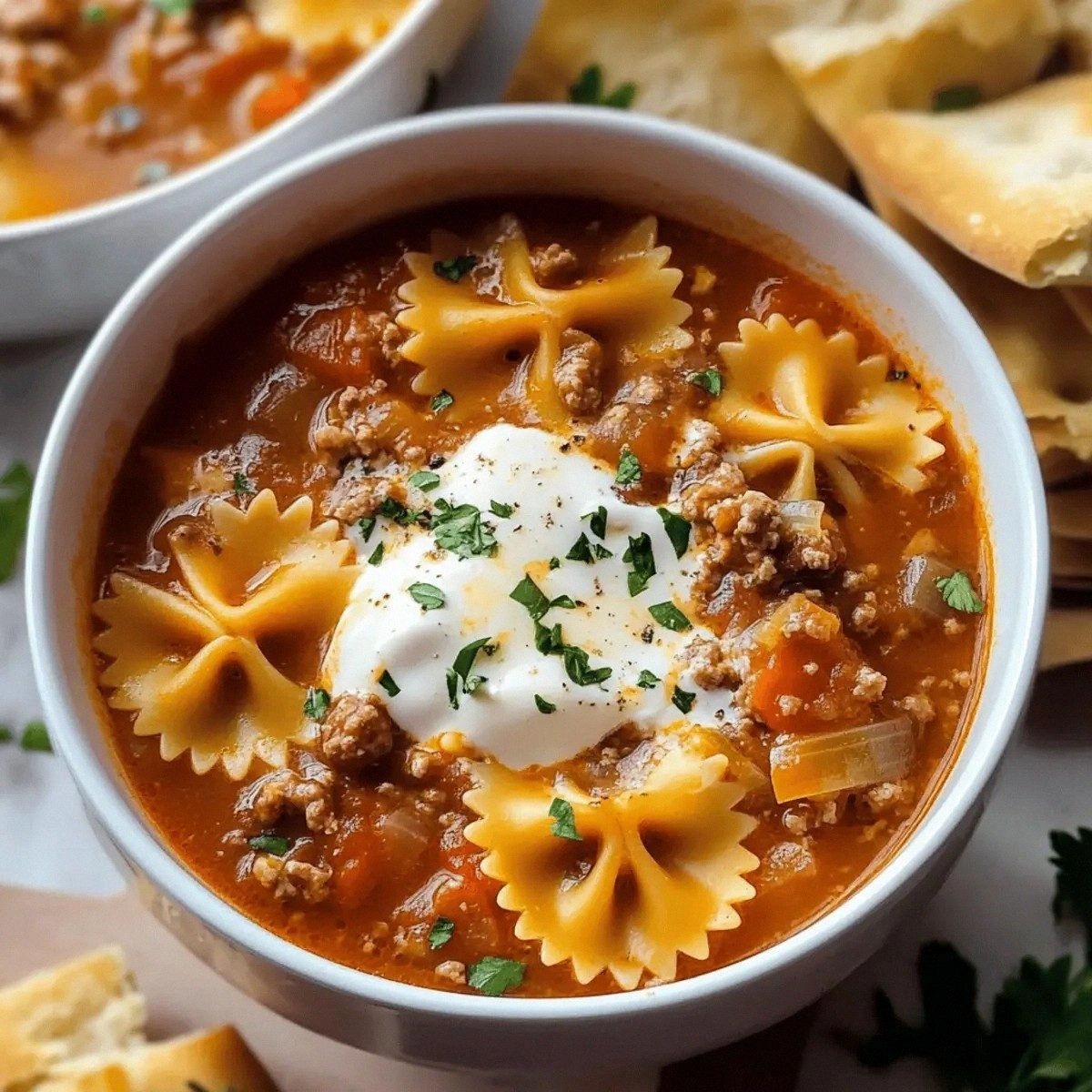
Fast forward to tonight, and I’m standing over a bubbling cauldron of Hearty Lasagna Soup with Bow Tie Pasta, the aroma of simmering tomatoes, garlic, and ground beef swirling around me like an old‑world Italian market. The soup’s surface shimmers with a glossy sheen, and each spoonful delivers that familiar lasagna flavor, but with the silkiness of a broth that coats the bow‑tie pasta like a velvet blanket. The cheese melts into little islands of gooey goodness, and the fresh parsley adds a pop of green that looks like confetti at a celebration. I dare you to taste this and not go back for seconds—your palate will be doing a happy dance.
What makes this version stand out is the marriage of textures: the al dente bite of farfalle, the creamy richness of ricotta, and the hearty depth of a meat‑laden broth that would make any nonna proud. Most recipes get the broth too thin or the cheese too clumpy; I’ve cracked the code by deglazing the pan with a splash of chicken stock, letting the tomato paste caramelize just enough to give a subtle caramel note, and finishing with a swirl of ricotta that stays luscious, not grainy. I’m about to share a technique you won’t find in any generic blog: a quick “cheese‑toss” that locks the ricotta into the soup without curdling—think of it as a secret handshake between dairy and broth.
And now the fun part: I’m going to walk you through every single step—by the end, you’ll wonder how you ever made lasagna any other way. Okay, ready for the game‑changer? This next part? Pure magic. Stay with me here — this is worth it.
What Makes This Version Stand Out
- Taste: The broth is a symphony of tomato, beef, and herbs, balanced by the creamy ricotta that adds a whisper of sweetness.
- Texture: Bow tie pasta holds onto the sauce like a lover clings to a promise—every forkful is perfectly coated.
- Simplicity: Fewer pans, fewer steps, and no baking required, so you can serve a lasagna‑style dinner in under an hour.
- Uniqueness: Turning a layered casserole into a soup preserves the iconic flavors while delivering a comforting, spoon‑friendly experience.
- Crowd Reaction: Guests often claim it’s “the best lasagna they’ve ever had,” and then they ask for the recipe before the first bowl is even finished.
- Ingredient Quality: Using high‑quality ground beef and fresh parsley elevates the dish from ordinary to unforgettable.
- Cooking Method: The quick deglaze and simmer technique locks in flavor without the dreaded dry lasagna edges.
- Make‑Ahead Potential: This soup stores beautifully, gaining even more depth after a night in the fridge.
Alright, let's break down exactly what goes into this masterpiece...
Inside the Ingredient List
The Flavor Base
The foundation of any great soup starts with aromatics, and here the diced onion and minced garlic are the dynamic duo that awaken your senses. The onion, when sautéed in olive oil, turns translucent and sweet, creating a buttery backdrop for the garlic’s pungent bite. If you skip the garlic, you’ll lose that signature lasagna “kick” that makes the broth sing. For a twist, try using shallots instead of onion for a milder, more nuanced flavor profile.
The Tomato Trio
Diced tomatoes, tomato sauce, and tomato paste each play a distinct role. The diced tomatoes provide texture and bursts of fresh acidity, the sauce offers a smooth body, and the paste intensifies the overall richness with a caramelized sweetness. Missing any one of these will leave the soup flat—think of it as a three‑part harmony; remove the alto, and the chorus feels off. If canned tomatoes are your only option, choose fire‑roasted for an extra smoky note.
The Texture Crew
Bow tie pasta, or farfalle, is chosen not just for its whimsical shape but because its ridged “bow” captures the sauce in every nook. This ensures each spoonful is a balanced bite of pasta and broth. If you’re gluten‑free, swap in gluten‑free rotini; the texture will remain satisfying. Skipping the pasta altogether turns this into a stew, which is delicious but loses the comforting “lasagna” feel.
The Final Flourish
Ricotta, mozzarella, and Parmesan are the three‑cheese trio that crowns the soup. Ricotta adds a cloud‑like creaminess, mozzarella melts into stretchy strings, and Parmesan brings a salty, nutty finish. Over‑mixing the ricotta can cause it to break down into a grainy mess—fold it in gently at the end. If you’re dairy‑intolerant, try a blend of silken tofu and nutritional yeast for a similar mouthfeel.
Everything's prepped? Good. Let's get into the real action...
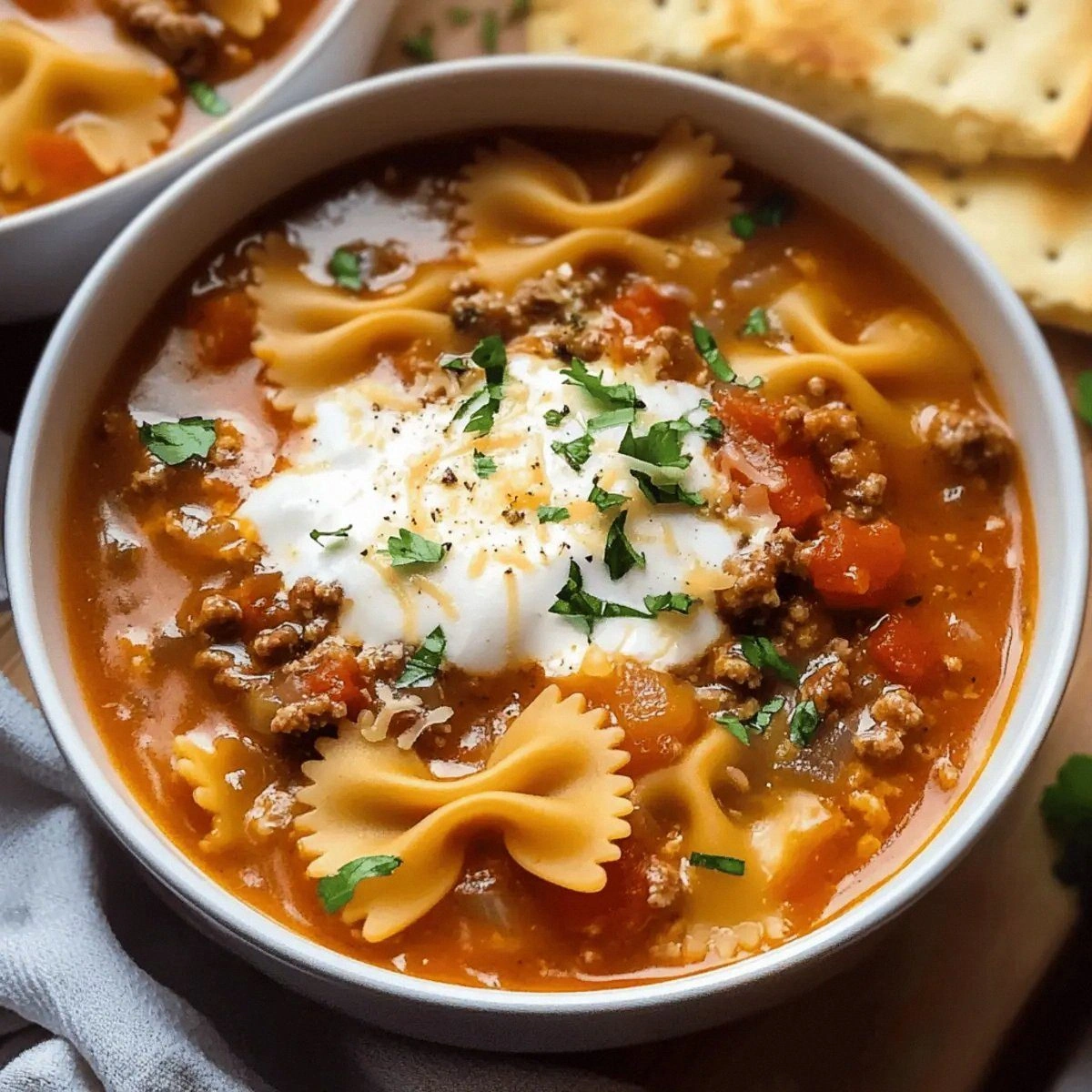
The Method — Step by Step
Heat the olive oil in a large Dutch oven over medium‑high heat until it shimmers like a mirror. Add the ground beef, breaking it up with a wooden spoon, and let it sizzle until the edges turn a deep, caramelized brown—about 5 minutes. That sizzle when it hits the pan? Absolute perfection. Season with a pinch of sea salt and black pepper, then set the meat aside on a plate, leaving the flavorful brown bits (fond) in the pot.
Reduce the heat to medium and toss in the diced onion, stirring until it becomes translucent and slightly golden, about 3–4 minutes. Add the minced garlic and cook for another 30 seconds, just until fragrant; overcooking garlic will make it bitter, so keep a close eye.
Kitchen Hack: Sprinkle a tiny pinch of sugar while the onions soften; this accelerates caramelization and balances the acidity of the tomatoes.Stir in the tomato paste, letting it brown for 2 minutes. This step is crucial; it deepens the tomato flavor and prevents a raw, metallic taste. Then pour in the diced tomatoes with their juices, followed by the tomato sauce. Give everything a good stir, scraping up any browned bits from the bottom of the pot.
Return the browned ground beef to the pot, then pour in the chicken stock, allowing the mixture to come to a gentle boil. Add the Italian herb blend, sea salt, and black pepper. Reduce the heat to a simmer and let the soup develop its character for 15 minutes, stirring occasionally. You’ll notice the broth thickening slightly and the aromas melding into a harmonious perfume.
While the soup simmers, bring a separate pot of salted water to a boil and cook the bow tie pasta al dente—usually 9–11 minutes, depending on the brand.
Drain and set aside.Kitchen Hack: Add a splash of olive oil to the pasta water; it prevents sticking without greasing the noodles, keeping them ready to soak up the soup.Now, the critical moment: gently fold the ricotta cheese into the hot broth, using a silicone spatula and a folding motion to keep it smooth.
The ricotta should melt into ribbons, creating a luxurious creaminess that clings to the pasta.Watch Out: If the soup is boiling vigorously, the ricotta can curdle. Reduce the heat to low and stir slowly to maintain a silky texture.Stir the cooked bow tie pasta into the soup, allowing each piece to become drenched in the tomato‑beef broth. Let the mixture simmer for another 3 minutes so the pasta absorbs the flavors. At this point, sprinkle the shredded mozzarella and grated Parmesan, letting them melt into a glossy, cheesy veil.
Finish with a generous handful of chopped fresh parsley, giving the soup a burst of color and a fresh, herbaceous note. Taste and adjust seasoning—perhaps a pinch more salt or a dash of pepper. Ladle the soup into bowls, letting the steam rise like a cozy blanket. Picture yourself pulling this out of the oven, the whole kitchen smelling incredible, and you’ll understand why this is hands down the best version you'll ever make at home.
That's it — you did it. But hold on, I've got a few more tricks that'll take this to another level...
Insider Tricks for Flawless Results
The Temperature Rule Nobody Follows
Keep the broth at a gentle simmer, never a rolling boil, once the dairy joins the party. High heat can cause the ricotta to separate, turning the soup grainy. I once tried a “quick boil” and ended up with curdled cheese—trust me, the texture was a nightmare. The secret is to maintain a steady 180°F (82°C) simmer, which you can gauge by the occasional bubble that rises slowly to the surface.
Why Your Nose Knows Best
Before you even taste, let your nose do the work. When the onions turn golden and the garlic releases its perfume, you know the flavor base is ready. If the soup smells flat, it likely needs a splash more tomato paste or a pinch of sugar to awaken the acidity. I swear by this nose‑check; it saved me from a bland batch more times than I can count.
The 5‑Minute Rest That Changes Everything
After you finish cooking, turn off the heat and let the soup sit, covered, for five minutes. This short rest allows the flavors to meld, the pasta to finish absorbing the broth, and the cheese to settle into a velvety consistency. Skipping this step is like serving a song before the chorus—you miss the full impact.
Seasoning in Layers
Instead of dumping all the salt and pepper at once, season at three points: with the meat, with the tomato base, and finally after the pasta is added. This layered seasoning builds complexity and ensures every bite is perfectly balanced. A friend once added all the salt at the end and the soup tasted flat—learn from that mistake.
Cheese Timing is Everything
Adding mozzarella too early can cause it to become stringy and oily. I add it in the final two minutes of simmering, just enough to melt and become gooey without losing its stretch. The Parmesan, on the other hand, should be sprinkled right before serving for that final punch of umami.
Creative Twists and Variations
This recipe is a playground. Here are some of my favorite ways to switch things up:
Spicy Southwest
Swap the Italian herb blend for a teaspoon of smoked paprika and a pinch of cayenne. Add a can of black beans and a handful of corn kernels. The result is a lasagna soup with a bold, smoky kick that’s perfect for game night.
Vegetarian Delight
Replace the ground beef with a mixture of finely chopped mushrooms and lentils. Use vegetable stock instead of chicken stock, and increase the tomato paste for extra body. This version still delivers the hearty feel without any meat.
Creamy Mushroom
Stir in a cup of sliced cremini mushrooms after the onions soften, letting them brown before adding the tomatoes. Finish with a splash of heavy cream and a sprinkle of thyme. The soup becomes luxuriously creamy with earthy undertones.
Greek Fusion
Swap the Italian herb blend for oregano and add a handful of Kalamata olives and a squeeze of lemon juice at the end. Top with crumbled feta instead of mozzarella for a tangy Mediterranean twist.
Cheesy Bread Bowl
Instead of serving in a bowl, hollow out a round loaf of sourdough, toast the inside, and ladle the soup into the bread. The crust soaks up the broth, creating a crunchy, cheesy vessel that’s as fun to eat as it is delicious.
Storing and Bringing It Back to Life
Fridge Storage
Allow the soup to cool to room temperature, then transfer it to an airtight container. It will keep for up to 4 days in the refrigerator. When reheating, add a splash of water or broth—this steams the pasta back to perfect tenderness and prevents the soup from thickening too much.
Freezer Friendly
This soup freezes beautifully. Portion it into freezer‑safe bags or containers, leaving a little headspace for expansion. It can be stored for up to 3 months. To reheat, thaw overnight in the fridge, then simmer gently on the stove, adding a bit more stock if needed.
Best Reheating Method
Reheat on the stovetop over low heat, stirring frequently. Avoid the microwave if you can; the stovetop ensures even warming and keeps the ricotta from curdling. Add a teaspoon of olive oil at the end for a glossy finish that mimics the fresh‑made texture.