Picture this: you’re halfway through a late‑night binge on your favorite streaming series, the lights dim, and you’re craving something that feels like a hug in a bowl. You open the pantry, stare at a handful of ramen packets, and then—because you’re a culinary daredevil—reach for Trader Joe’s frozen French Onion Soup. That’s when the kitchen turned into a laboratory of flavor, and the idea of French Onion Ramen was born. It’s the kind of dish that makes you question why you ever settled for plain noodles, and it’s the secret weapon you’ll keep in your recipe drawer for when the mood is both indulgent and quick.
When you first taste it, the broth is a rich, caramelized onion symphony that swirls around the noodles like a velvet ribbon. The Gruyère melts into a silky coating that clings to each strand, while the crispy fried onions add a satisfying crunch that echoes the original French onion soup’s signature garnish. The aroma is intoxicating—warm, savory, and unmistakably comforting. It’s the sort of meal that makes your stomach rumble and your heart sigh in contentment all at once.
What sets this version apart is not just the bold combination of ingredients, but the way each element is amplified. The frozen soup provides a depth of flavor that would otherwise take hours to achieve; the ramen offers a playful chew; the cheese transforms the broth into a luxuriously thick sauce; and the crispy onions finish it with a textural punch. The result is a dish that feels gourmet yet feels like a midnight snack, a perfect balance of indulgence and convenience.
I dare you to taste this and not go back for seconds. That’s the power of a dish that’s hands down the best version you’ll ever make at home. If you’ve ever struggled to bring French onion soup to life, you’re not alone—and I’ve got the fix. Picture yourself pulling this out of the pot, the whole kitchen smelling incredible, and watching friends light up as they take that first bite.
What Makes This Version Stand Out
- Flavor Depth: The frozen French Onion Soup infuses the broth with caramelized onion sweetness that would otherwise take a day to develop. This instant richness makes every spoonful a revelation.
- Texture Contrast: Ramen noodles provide a chewy backbone, while the crispy fried onions deliver a crunch that snaps like thin ice against the creamy sauce.
- Cheese Coating: Gruyère melts into a velvety glaze that coats each noodle, creating a sauce that clings like velvet to every strand.
- Convenience: All components are pre‑made or ready to cook, so you’re looking at a 45‑minute meal that feels like a five‑star dinner.
- Audience Appeal: It’s a crowd‑pleaser that satisfies both ramen lovers and soup enthusiasts, making it perfect for dinner parties or solo comfort food.
- Make‑Ahead Potential: The broth can be prepared in advance, and the noodles can be cooked and stored separately, allowing you to assemble the dish in minutes when hunger strikes.
Inside the Ingredient List
The Flavor Base
At the heart of this dish lies the French Onion Soup, a pre‑made caramelized onion sauce that carries the deep, sweet notes of slow‑cooked onions. When combined with beef broth, it creates a savory canvas that elevates the ramen into a gourmet experience. If you’re missing the frozen soup, a homemade onion broth with caramelized onions and a touch of caramel syrup will do, but it will take longer to achieve the same depth.
Choosing a high‑quality beef broth is essential; a rich, well‑seasoned broth will carry the flavors of the soup and cheese, while a low‑sodium option allows you to control the salt level without compromising taste.
The Texture Crew
Ramen noodles bring the chewy, comforting texture that defines the dish. Opt for fresh ramen for a softer bite, or use the instant packs for speed—just remember to rinse them briefly to remove excess starch. Skipping the noodles would turn this into a simple soup; including them adds a playful element that keeps diners engaged.
Gruyère cheese is the glue that binds the broth and noodles together. Its nutty, buttery profile melts smoothly, forming a sauce that coats each strand. If you’re lactose intolerant, a dairy‑free cheese with a similar melting profile can substitute, but the flavor will shift slightly.
The Unexpected Star
Trader Joe’s Crispy Fried Onions or shallots add a final crunch that mimics the traditional French onion soup garnish. They provide a textural contrast and a burst of caramelized onion flavor that brightens the dish. If you prefer a different crunch, toasted sesame seeds or chopped fresh onions can work, though they won’t replicate the same caramelized depth.
Using a high‑quality crispy onion product ensures the crunch remains crisp even after the broth has warmed. A lower‑quality version might become soggy, which would dilute the sensory experience.
The Final Flourish
Optional additions such as soy sauce or Worcestershire sauce introduce an umami punch that echoes the original soup’s savory undertones. A splash of soy sauce brings saltiness and depth, while Worcestershire adds a tangy bite that complements the cheese. These additions are optional but recommended for those who love a deeper flavor profile.
Even a pinch of freshly ground black pepper or a drizzle of truffle oil can elevate the dish further, but be careful not to overpower the delicate balance of flavors.
Everything’s prepped? Good. Let’s get into the real action.
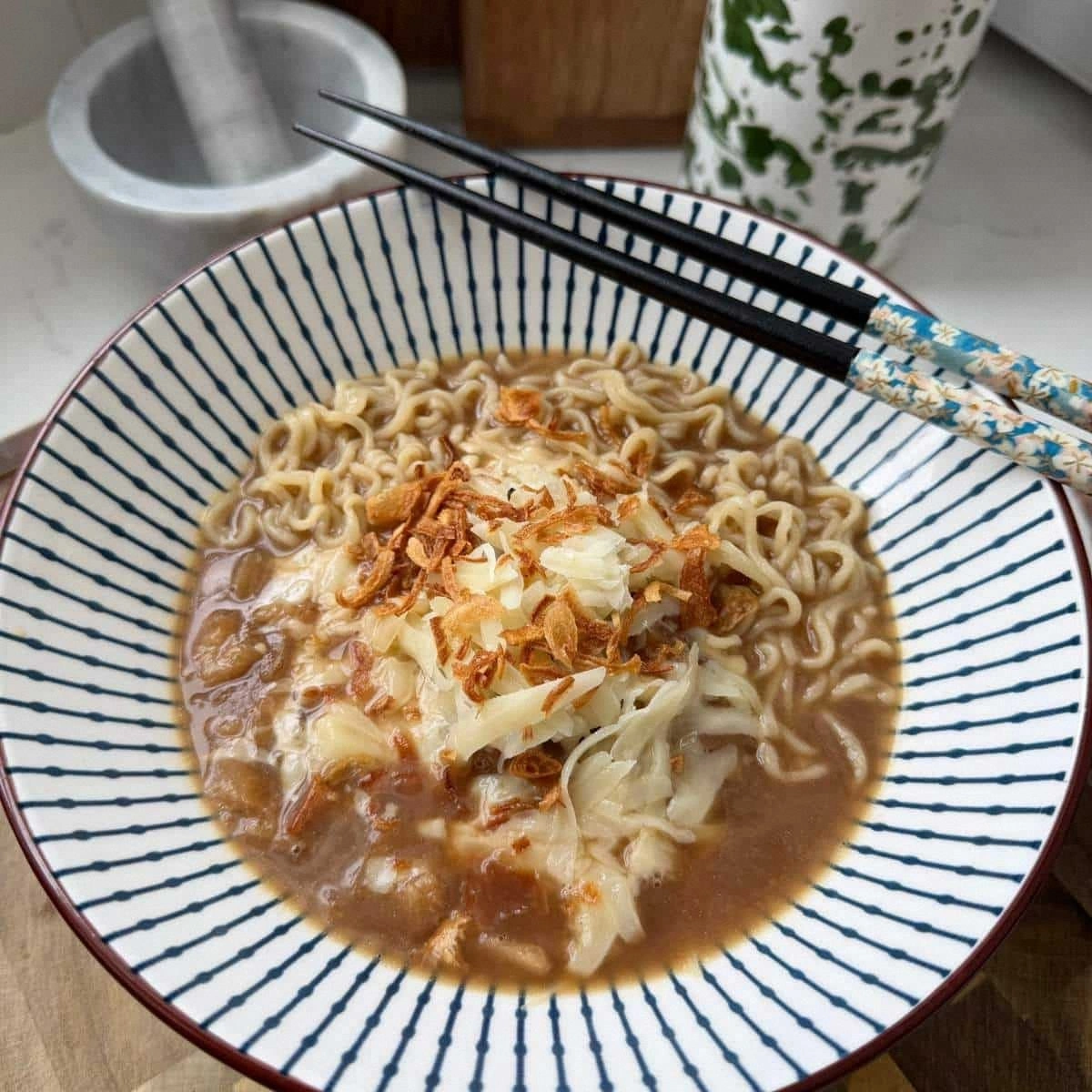
The Method — Step by Step
- Simmer the Base: In a medium saucepan, pour 2 cups of beef broth over medium heat. Add the frozen French Onion Soup and stir until the mixture is smooth and the soup has fully melted into the broth. The aroma of caramelized onions will begin to fill your kitchen, signaling that the base is ready.
- Cook the Noodles: While the broth is coming to life, bring a large pot of salted water to a rolling boil. Drop in the 2 packs of ramen noodles and let them cook for 2–3 minutes, just until they’re tender but still firm. Drain and set aside, reserving a splash of the cooking water for later. Kitchen Hack: Rinse the drained noodles under cold water to stop the cooking process and keep them from sticking together.
- Melting the Cheese: In a large skillet, heat a teaspoon of neutral oil over medium heat. Sprinkle the shredded Gruyère over the hot pan, letting it melt into a silky, golden sauce. The cheese should coat the skillet like a velvet curtain; if it starts to brown too quickly, lower the heat.
- Combine and Coat: Return the drained noodles to the skillet and pour in the cheese‑infused broth. Toss everything together until the noodles are fully coated and the sauce has thickened slightly. If the mixture looks too thick, add a tablespoon of the reserved noodle water to reach the desired consistency. Kitchen Hack: Stir the mixture from the bottom of the skillet to prevent the cheese from settling and forming lumps.
- Serve and Garnish: Transfer the noodle‑soup mixture to serving bowls, ensuring each bowl gets an even distribution of the creamy sauce. The moment the steam rises, the kitchen smells like a French café on a rainy day. Watch Out: Be careful not to overheat the sauce after adding the onions, or it may scorch and lose its delicate flavor.
- Add a Savory Touch: For a subtle umami boost, drizzle a teaspoon of soy sauce or Worcestershire sauce over each bowl. This step is optional but adds depth that mirrors the classic French onion soup’s savory notes.
- Rest and Final Touches: Allow the bowls to sit for a minute, letting the flavors meld and the cheese settle. During this brief pause, you can sprinkle fresh parsley or chives if you like a touch of color and freshness.
- Plate with Pride: Serve immediately, and watch as your guests’ eyes widen. This dish is a harmony of sweet caramelized onions, creamy cheese, and savory broth, all wrapped in chewy ramen noodles.
Insider Tricks for Flawless Results
The Temperature Rule Nobody Follows
Many cooks over‑cook the noodles, turning them into mush. Keep the heat moderate when adding the broth to the skillet; a gentle simmer preserves the noodles’ chew and prevents the sauce from separating. I’ve seen a friend skip this step, and the result was a soggy, flavorless mess.
Why Your Nose Knows Best
The aroma is the first indicator of readiness. When the broth smells caramelized and the cheese is golden, you’re at the sweet spot. Trust your nose; it’s the most reliable guide in the kitchen.
The 5-Minute Rest That Changes Everything
Letting the dish sit for 5 minutes after cooking allows the flavors to marry. The cheese thickens into a luxurious coating, and the onions’ crunch remains intact. Skipping this pause often leaves the sauce thin and the onions soggy.
Use the Reserved Noodle Water Wisely
The starchy water you reserve from boiling the noodles is a flavor booster. Add it gradually to the sauce to adjust thickness and add a subtle noodle undertone that ties everything together.
Keep the Onions Crisp
Once the onions are added, they should remain crisp. If you notice them softening, lower the heat immediately and stir gently. A crisp onion is the signature finish that makes this dish unforgettable.
Creative Twists and Variations
This recipe is a playground. Here are some of my favorite ways to switch things up:
Spicy Sriracha Kick
Stir in a tablespoon of sriracha or your favorite hot sauce while the broth simmers. The heat balances the sweetness of the onions and adds a smoky depth that pairs beautifully with the cheese.
Vegetarian Delight
Swap the beef broth for a vegetable stock and replace the frozen soup with a vegetarian French onion soup. Add sautéed mushrooms for an earthy note that mimics the umami of meat.
Herb‑Infused Variation
Fold in fresh thyme or rosemary into the broth before adding the noodles. The aromatic herbs elevate the dish, making it feel like a rustic French stew.
Cheese Swap
Try a blend of aged cheddar and mozzarella instead of Gruyère for a different flavor profile. The cheddar adds sharpness while the mozzarella keeps the sauce silky.
Protein Boost
Top the finished dish with a poached egg or a few slices of thinly sliced steak. The protein adds heartiness and turns the ramen into a full‑blown dinner.
Storing and Bringing It Back to Life
Fridge Storage
Store the cooked ramen in an airtight container in the fridge for up to 3 days. Keep the broth and noodles separate if you plan to reheat them later, as the noodles can become soggy when combined too early.
Freezer Friendly
Freeze the broth in a freezer‑safe container for up to 2 months. The noodles can be frozen individually in a zip‑top bag; reheat by microwaving for 30 seconds and then adding the hot broth.
Best Reheating Method
When reheating, add a splash of water or broth to the sauce to restore moisture. Heat on low, stirring frequently, until the cheese is melted and the noodles are heated through. This trick prevents the cheese from drying out and keeps the dish silky.