Picture this: a quiet Tuesday night, the kitchen lights low, the air thick with the scent of garlic and fresh herbs, and you, a culinary explorer, staring at a pile of Brussels sprouts and a block of butternut squash. The last time I tried to pair these two was a culinary disaster—overcooked sprouts, underseasoned squash, and a pasta that felt like it had been left in a bowl of cold water. The result? A sad, soggy plate that made me question my love for vegetables. But that night, I was determined to rewrite the narrative.
So I rolled up my sleeves, grabbed a handful of bacon, a fresh chicken breast, and that orange‑golden squash that had been waiting in the fridge. I imagined the sizzling bacon releasing its fat like a golden river, the sprouts popping with a crisp that would crackle against your teeth, and the butternut turning caramelized gold, each bite a burst of sweet earthiness. The kitchen filled with the comforting smell of roasting veggies, the sharp bite of lemon, and the subtle, nutty aroma of parmesan. I could hear the sizzle, feel the heat, taste the anticipation, and see the colors transform.
What makes this version stand out? It’s not just the ingredients; it’s the harmony of textures and flavors that play against one another like a well‑orchestrated symphony. The bacon’s salty crunch balances the sweet squash; the chicken’s savory depth anchors the dish; the lemon’s brightness lifts every bite. This is the kind of meal that feels like a hug from the inside out, and I’m here to share every step so you can replicate that magic at home.
Let me walk you through every single step — by the end, you’ll wonder how you ever made it any other way. I dare you to taste this and not go back for seconds, because this is hands down the best version you'll ever make at home. If you've ever struggled with getting Brussels sprouts to crisp up or squashing butternut squash into the perfect bite‑size, you're not alone — and I've got the fix. Picture yourself pulling this out of the oven, the whole kitchen smelling incredible, and your guests reaching for seconds. That sizzle when it hits the pan? Absolute perfection.
What Makes This Version Stand Out
- Flavor: The combination of caramelized butternut, roasted Brussels sprouts, and lemon‑thyme creates a layered taste that feels both comforting and adventurous.
- Texture: Crispy bacon edges, tender chicken, al dente pasta, and a velvety parmesan sauce that coats every strand.
- Convenience: One‑pan cooking saves time and cleanup, yet delivers a restaurant‑quality plate.
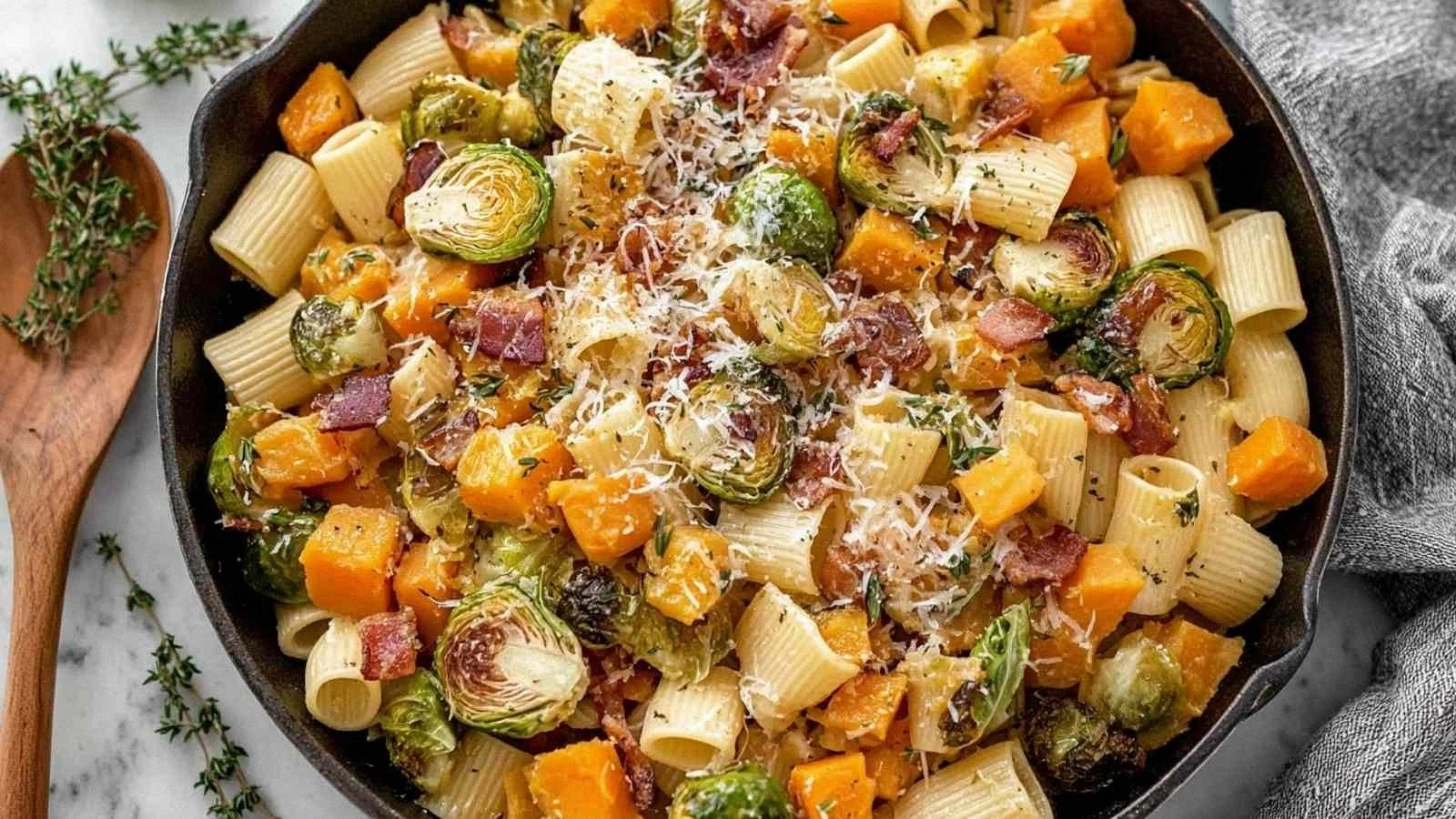
- Visual Appeal: The vibrant orange of the squash, the green of the sprouts, and the golden bacon make for a dish that looks as good as it tastes.
- Versatility: Swap chicken for shrimp or tofu, use any pasta shape, or add a splash of white wine for a deeper umami.
- Nutrition: Balanced macros with protein, healthy fats, and complex carbs, plus a dose of beta‑carotene from the squash.
- Audience: A crowd‑pleaser for family dinners, date nights, or potlucks where you want to impress without the hassle.
- Seasonality: While perfect in fall, this dish shines any time you crave a hearty, comforting meal.
Inside the Ingredient List
The Flavor Base
At the heart of this dish lies the bacon, a humble strip that transforms into a salty, smoky foundation. When rendered, the bacon releases fat that becomes the cooking medium for the shallots and garlic, infusing the entire pan with a subtle depth. If you skip bacon, the dish loses that savory backbone, and you’ll need to add extra salt or a splash of soy sauce to compensate. For a vegetarian twist, replace bacon with smoked tempeh or a handful of pancetta‑style tofu.
The Texture Crew
Chicken breast is the protein powerhouse here. Sliced thinly, it cooks quickly and absorbs the lemon‑thyme sauce, delivering a juicy bite. If you prefer a different protein, thinly sliced pork tenderloin or shrimp will work beautifully. The pasta, an unassuming 10‑ounce package, serves as the canvas that holds everything together. Choose a shape that hugs the sauce—fettuccine or rigatoni works wonderfully. If you’re watching carbs, swap for spiralized zucchini or a low‑carb pasta alternative.
The Unexpected Star
Butternut squash, often relegated to side dishes, takes center stage. Its natural sweetness caramelizes when roasted, creating pockets of buttery flavor that contrast with the slightly bitter Brussels sprouts. If you can’t find butternut, butternut pumpkin or acorn squash will give a similar profile. When selecting, look for squash that feels heavy for its size and has a smooth, unblemished skin.
The Final Flourish
Parmesan cheese is more than a topping; it melts into a silky sauce that coats the pasta like velvet. Fresh thyme and a squeeze of lemon add brightness and cut through the richness. A pinch of red pepper flakes offers a subtle heat that awakens the palate. If you’re dairy‑free, try a nutritional yeast blend or a vegan parmesan alternative. The lemon zest is a finishing touch that keeps the dish from feeling heavy.
Everything's prepped? Good. Let's get into the real action...
The Method — Step by Step
- Step 1: Prepare the Veggies. Cut the butternut squash into 1‑inch cubes, halve the Brussels sprouts, and dice the shallots. Toss them in a bowl with a splash of olive oil, salt, and pepper. The goal is to coat each piece lightly so they roast evenly. If you’re short on time, use pre‑cut veggies from the grocery aisle—just keep an eye on the cooking time.
- Step 2: Cook the Bacon. In a large skillet over medium heat, add the bacon strips. Cook until the fat renders and the bacon is crisp, about 5–7 minutes. Remove the bacon with a slotted spoon and set aside on paper towels to drain. Keep the bacon fat in the skillet—this will be the base for sautéing the aromatics.
- Step 3: Sauté Aromatics. Add the diced shallots to the bacon fat and cook until translucent, about 3 minutes. Stir in the minced garlic and red pepper flakes, cooking until fragrant—about 30 seconds. The garlic should smell nutty, not burnt. This step builds the flavor foundation for the whole dish.
- Step 4: Add the Chicken. Slice the chicken breast into thin strips and season with salt and pepper. Push the aromatics to the side of the skillet and add the chicken. Sear until golden on both sides, about 4–5 minutes. The chicken should be cooked through yet still juicy. Remove and set aside with the bacon.
- Step 5: Roast the Veggies. In the same skillet, add the prepared Brussels sprouts and butternut cubes. Toss to coat with the remaining bacon fat and aromatics. Roast over medium‑high heat for 15 minutes, stirring occasionally, until the veggies are caramelized and tender. The sprouts should have a slight crunch, and the squash should be soft with golden edges.
- Step 6: Cook the Pasta. While the veggies roast, bring a large pot of salted water to a boil. Add the pasta and cook until al dente, about 8–9 minutes. Reserve 1 cup of pasta water, then drain the pasta and return it to the pot.
- Step 7: Combine Everything. Add the roasted veggies, bacon, and chicken back into the skillet. Stir in the cooked pasta, a splash of lemon juice, and half of the parmesan. Toss everything together, adding reserved pasta water a tablespoon at a time until the sauce is silky and coats the noodles. Sprinkle in fresh thyme leaves and the remaining parmesan. Adjust seasoning with salt and pepper.
- Step 8: Finish with a Final Touch. Squeeze the juice of the whole lemon over the dish, giving it a bright, citrusy finish. Let it sit for a minute so the flavors meld. Serve immediately, garnishing with extra parmesan and a few thyme sprigs if desired.
That's it — you did it. But hold on, I've got a few more tricks that'll take this to another level. I dare you to taste this and not go back for seconds; the combination of textures and flavors will leave you craving more.
Insider Tricks for Flawless Results
The Temperature Rule Nobody Follows
Many people cook pasta over high heat, causing it to stick. I always keep the water at a rolling boil and reduce the heat slightly after adding the pasta. This keeps the noodles from clumping and ensures a consistent al dente bite. If you’re using a non‑stick skillet for the veggies, keep the heat medium; too high and you’ll burn the sugar in the squash.
Why Your Nose Knows Best
During the roasting step, keep your nose close to the skillet. When the Brussels sprouts start to caramelize, you’ll notice a sweet, nutty aroma that signals they’re ready. This olfactory cue is more reliable than timing alone because ovens can vary in heat distribution.
The 5‑Minute Rest That Changes Everything
After you toss the pasta with the sauce, let the dish rest for 5 minutes off the heat. This allows the pasta to absorb the sauce fully, creating a richer, more cohesive flavor profile. It also gives the chicken a chance to reheat gently, preventing it from drying out.
Use a Meat Thermometer
Even though chicken breasts are thin, they can overcook quickly. A quick scan with a thermometer ensures they hit 165°F without becoming rubbery. If you’re in a hurry, trust the visual cue of a pink center, but a thermometer guarantees consistency.
Keep the Sauce Creamy
Adding a tablespoon of pasta water at a time prevents the parmesan from clumping. If the sauce becomes too thick, add more water. A light, silky sauce is essential to make the dish feel luxurious rather than heavy.
Creative Twists and Variations
This recipe is a playground. Here are some of my favorite ways to switch things up:
Spicy Cajun Version
Swap the red pepper flakes for Cajun seasoning and add a handful of diced poblano peppers. The smoky heat pairs beautifully with the sweet squash, creating a bold, comforting dish that’s perfect for cooler evenings.
Seafood Surprise
Replace the chicken with shrimp or scallops. Sauté the seafood just until pink, then fold it into the pasta and veggies. The briny flavor complements the lemon and thyme, giving the dish a fresh, seaside vibe.
Vegan Delight
Omit the bacon and chicken entirely. Use a generous amount of smoked tempeh or sautéed mushrooms for umami. Finish with a drizzle of truffle oil and vegan parmesan for a decadent, plant‑based version.
Low‑Carb Twist
Swap the pasta for spiralized zucchini or shirataki noodles. The veggies absorb the sauce just as well, and the dish becomes a lean, nutrient‑dense option for those watching their carb intake.
Gourmet Upgrade
Add a splash of white wine during the sauté step, letting it reduce for a minute before adding the veggies. The wine infuses depth, and a pinch of nutmeg in the sauce elevates the dish to a gourmet level.
Storing and Bringing It Back to Life
Fridge Storage
Cool the dish completely before transferring to an airtight container. Store in the refrigerator for up to 3 days. The flavors deepen, making it even more delicious the next day.
Freezer Friendly
Divide the dish into individual portions and place each in a freezer‑safe bag. Freeze for up to 2 months. When ready to eat, thaw overnight in the fridge and reheat gently.
Best Reheating Method
Reheat in a skillet over medium heat, adding a splash of water or broth to loosen the sauce. Stir frequently until heated through. A tiny splash of water before reheating steams the pasta back to perfection, preventing it from drying out.